25 mg • NSAID / Analgesic & Anti-inflammatory
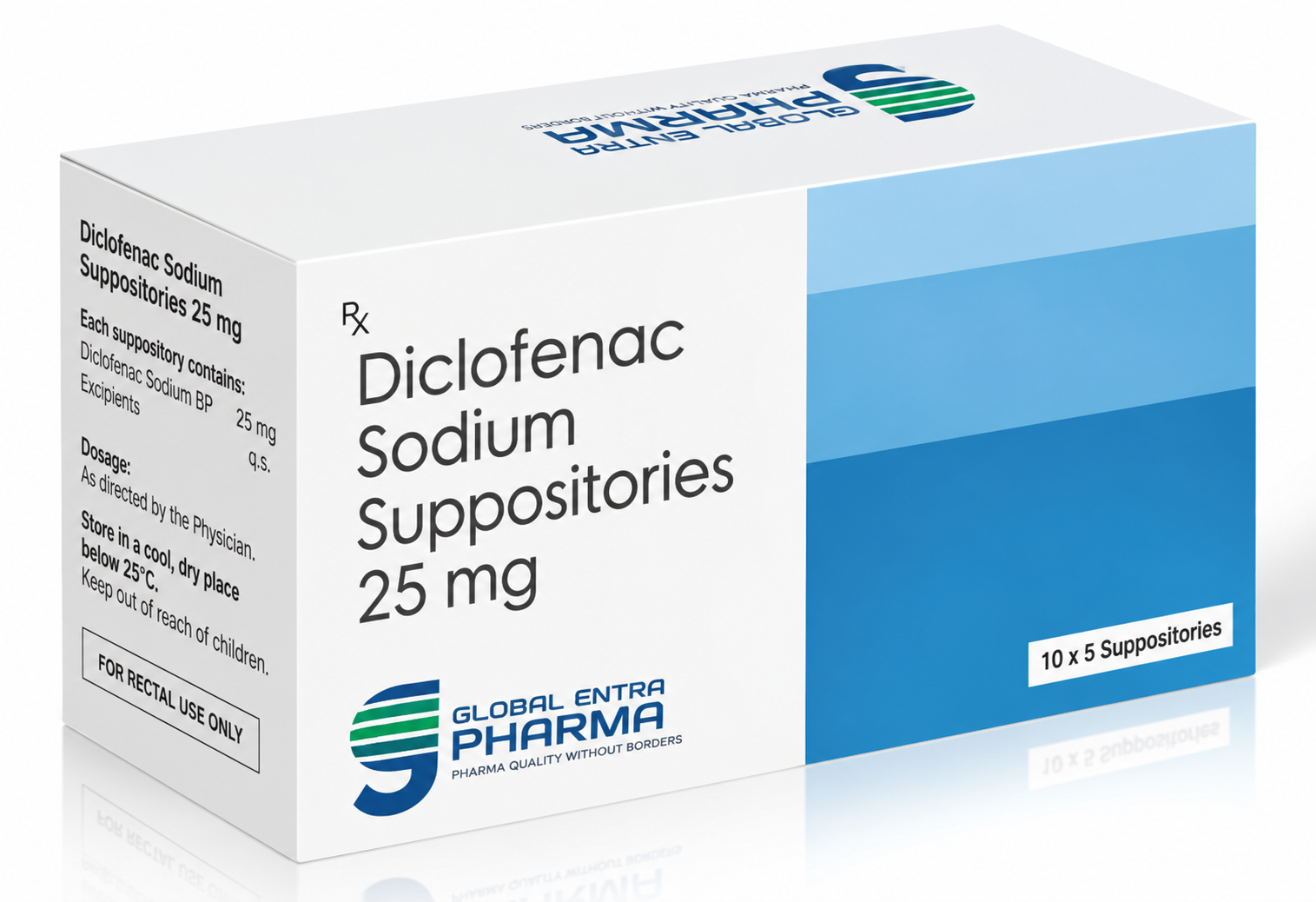
Strength : 25 mg
Therapeutic Class : NSAID / Analgesic & Anti-inflammatory
Packing : 10 x 5 Suppositories
Export Status : Available
Diclofenac Sodium 25 mg is a non-steroidal anti-inflammatory drug (NSAID) formulated as a rectal suppository. Diclofenac is widely used for the symptomatic management of pain, inflammation and swelling associated with musculoskeletal, rheumatic and other inflammatory conditions.
Diclofenac Sodium Suppositories offer a rectal route of administration when prescribed as an alternative to oral administration or when a healthcare professional considers rectal administration appropriate. The product is intended for rectal use only and should be used according to the approved prescribing information.
Active Ingredient: Diclofenac Sodium
Strength: 25 mg
Dosage Form: Rectal Suppository
Route of Administration: Rectal
Pharmaceutical Category: Non-Steroidal Anti-Inflammatory Drug (NSAID)
Pack Configuration: 10 x 5 Suppositories
Diclofenac Sodium belongs to the NSAID class of medicines. It possesses analgesic, anti-inflammatory and antipyretic properties and is used for symptomatic relief in various pain and inflammatory conditions.
Diclofenac Sodium may be prescribed for the management of pain and inflammation associated with:
Rheumatoid arthritis
Osteoarthritis
Ankylosing spondylitis
Acute musculoskeletal pain
Back pain
Sprains and strains
Tendinitis
Tenosynovitis
Bursitis
Acute gout, when clinically indicated
Pain associated with certain injuries
Post-operative pain and inflammation, when clinically indicated
Other painful inflammatory conditions as prescribed
The suitability of Diclofenac Sodium depends on the patient's medical condition, age, clinical assessment and applicable prescribing information.
Diclofenac Sodium works by inhibiting cyclooxygenase (COX) enzymes involved in prostaglandin synthesis. Prostaglandins are chemical mediators that contribute to pain, inflammation, swelling and fever.
By reducing prostaglandin production, diclofenac helps decrease inflammation and provides symptomatic relief from pain and associated discomfort.
Diclofenac Sodium Suppositories are designed for rectal administration. Following insertion, the suppository base melts or dissolves, releasing the active ingredient for absorption.
Rectal administration may be considered when an alternative route is clinically appropriate. The product must not be swallowed and should be used only as directed by a healthcare professional.
Diclofenac Sodium 25 mg Suppositories are intended for rectal use only.
The dosage and treatment duration depend on the patient's age, medical condition, response to therapy and prescribing instructions. Treatment should be prescribed or supervised by a qualified healthcare professional.
General administration instructions:
Wash hands before and after administration.
Remove the suppository from its protective packaging.
Follow the instructions provided by the healthcare professional or product leaflet.
Insert the suppository gently into the rectum as directed.
Do not swallow the suppository.
The total daily diclofenac dose from all dosage forms should be considered. Do not combine diclofenac with other diclofenac-containing products or NSAIDs unless specifically advised by a healthcare professional.
Like other NSAIDs, Diclofenac Sodium may cause adverse reactions. The occurrence and severity of side effects depend on the individual patient, dose, duration of treatment and underlying medical conditions.
Possible side effects include:
Nausea
Vomiting
Diarrhoea
Abdominal discomfort
Indigestion
Stomach pain
Headache
Dizziness
Loss of appetite
Increased liver enzyme levels
Diclofenac may cause gastrointestinal adverse reactions, including:
Gastritis
Heartburn
Abdominal pain
Gastrointestinal irritation
Stomach or intestinal ulcers
Gastrointestinal bleeding
Gastrointestinal perforation
Serious gastrointestinal complications may occur, including in patients without a previous history of gastrointestinal disorders.
Because this formulation is administered rectally, local adverse reactions may occur, including:
Rectal irritation
Burning sensation
Rectal discomfort
Irritation of the rectal mucosa
Worsening of haemorrhoids in susceptible patients
Rectal bleeding
Local inflammation
Diclofenac may be associated with cardiovascular risks, particularly at higher doses and with prolonged treatment.
Potential cardiovascular adverse reactions include:
Increased blood pressure
Fluid retention
Swelling of the ankles or legs
Palpitations
Heart failure
Increased risk of cardiovascular thrombotic events, including heart attack and stroke
Patients with cardiovascular disease or cardiovascular risk factors require medical assessment before treatment.
Diclofenac may affect kidney function, particularly in patients with pre-existing renal disease, dehydration, heart failure or other risk factors.
Possible renal complications include:
Reduced kidney function
Fluid retention
Changes in urine output
Blood or protein in the urine
Acute kidney injury in susceptible patients
Diclofenac may cause abnormalities in liver function and, in rare cases, serious hepatic injury.
Possible manifestations include:
Increased liver enzymes
Hepatitis
Jaundice
Liver dysfunction
Rare cases of severe liver injury
Possible hypersensitivity reactions include:
Skin rash
Itching
Urticaria
Swelling of the face or lips
Bronchospasm
Severe allergic reactions
Rare severe skin reactions, including Stevens-Johnson syndrome and toxic epidermal necrolysis
Patients should seek urgent medical attention if they experience:
Chest pain
Difficulty breathing
Sudden weakness on one side of the body
Sudden difficulty speaking
Severe allergic reaction
Swelling of the face or throat
Vomiting blood
Black or tarry stools
Severe abdominal pain
Yellowing of the skin or eyes
Severe or unusual skin reactions
Sudden reduction in urine output
Diclofenac should be discontinued and medical attention sought if serious adverse reactions are suspected.
Diclofenac Sodium may be contraindicated in patients with:
Hypersensitivity to diclofenac or any ingredient of the formulation
Previous allergic reactions to aspirin or other NSAIDs
Active peptic ulcer disease
Active gastrointestinal bleeding
Previous gastrointestinal perforation or bleeding associated with NSAID treatment
Severe heart failure
Severe renal impairment
Severe hepatic impairment
Certain established cardiovascular or cerebrovascular conditions, depending on approved product information
Active rectal bleeding
Proctitis or certain other rectal disorders
Third trimester of pregnancy
Contraindications should be verified against the approved product information applicable to the destination country.
Diclofenac Sodium should be used with caution in patients with:
A history of gastrointestinal ulcers or bleeding
Crohn's disease or ulcerative colitis
Hypertension
Cardiovascular disease
Diabetes
Hyperlipidaemia
Kidney disorders
Liver disorders
Asthma
Allergic conditions
Bleeding disorders
Dehydration
Advanced age
Low body weight
NSAIDs may mask certain signs of infection, including fever and pain. Patients should seek medical assessment if symptoms persist or worsen.
The lowest effective dose for the shortest necessary duration should be considered according to the prescribing information and healthcare professional's advice.
Diclofenac use during pregnancy requires medical assessment.
NSAIDs may pose risks to the fetus, particularly during later pregnancy. Diclofenac should not be used during the third trimester of pregnancy. Use during earlier stages of pregnancy should only be considered when medically justified and under healthcare professional supervision.
Pregnant patients should not use this medicine without consulting a healthcare professional.
Diclofenac use during breastfeeding should be assessed by a healthcare professional. Depending on the approved product information and clinical situation, use may be discouraged or require precautions.
Diclofenac may interact with other medicines. Potential interactions include:
Anticoagulants, such as warfarin
Antiplatelet medicines
Other NSAIDs
Aspirin
Corticosteroids
Selective serotonin reuptake inhibitors (SSRIs)
Diuretics
ACE inhibitors
Angiotensin II receptor blockers
Lithium
Methotrexate
Ciclosporin
Tacrolimus
Digoxin
Patients should inform their healthcare professional about all medicines, supplements and treatments they are currently taking.
Elderly patients may be more susceptible to gastrointestinal, cardiovascular and renal adverse reactions associated with NSAIDs.
Medical supervision is recommended, and treatment should follow the applicable prescribing information.
Diclofenac Sodium 25 mg may be prescribed for certain paediatric conditions in some jurisdictions, depending on the approved product, age, body weight and indication. Paediatric dosing should never be extrapolated from adult doses.
Use in children must be determined by a qualified healthcare professional according to the country-specific approved prescribing information.
Store Diclofenac Sodium Suppositories according to the storage instructions provided on the approved product packaging.
Protect the product from excessive heat, moisture and direct sunlight. Keep out of reach of children. Do not use after the expiry date.
Specific storage temperatures and conditions should be confirmed against the approved product specifications.
Diclofenac Sodium 25 mg Suppositories are available in packaging configurations subject to manufacturing and market requirements.
Product Strength: 25 mg
Pack Configuration: 10 x 5 Suppositories
Dosage Form: Rectal Suppository
Packaging: Subject to market and procurement requirements
Packaging, artwork, labelling and commercial supply requirements may be discussed with pharmaceutical buyers and importers.
Global Entra Pharma provides pharmaceutical product sourcing and export-oriented supply coordination for international pharmaceutical buyers, importers, distributors, wholesalers and institutional procurement organisations.
Diclofenac Sodium 25 mg is listed for pharmaceutical sourcing inquiries and international buyer requirements. Product availability, documentation, packaging specifications, commercial quantities and supply arrangements are subject to confirmation.
We support pharmaceutical buyers across African and international markets, including markets in Africa, Asia, the Middle East, Latin America and other regions, subject to applicable local import regulations, registration requirements and market authorisations.
Buyers and distributors interested in Diclofenac Sodium 25 mg may contact Global Entra Pharma for product information, commercial inquiries and pharmaceutical supply coordination.
This product information is provided for general pharmaceutical product reference and business information purposes only. It is not intended to replace medical advice, diagnosis or treatment. The use of Diclofenac Sodium should be based on the approved product information, prescription requirements and guidance of a qualified healthcare professional. Product indications, contraindications, warnings and regulatory status may differ between countries.
| Product Name | Diclofenac Sodium |
|---|---|
| Dosage Form | Suppository |
| Strength | 25 mg |
| Therapeutic Category | NSAID / Analgesic & Anti-inflammatory |
| Packing | 10 x 5 Suppositories |
| Export Status | Available |