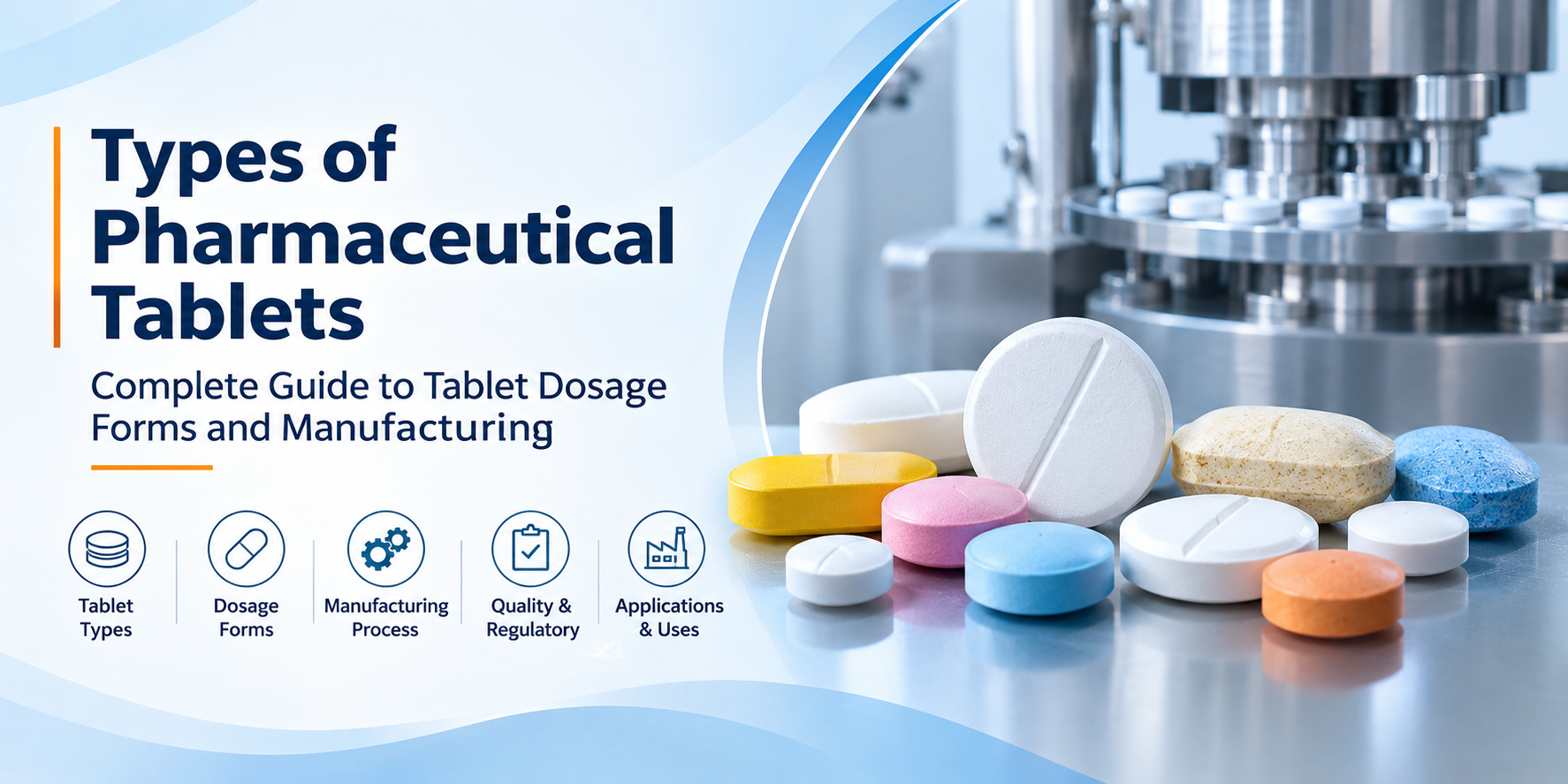
Types of Pharmaceutical Tablets: Complete Guide to Tablet Dosage Forms
Pharmaceutical tablets are among the most widely used solid dosage forms in the pharmaceutical industry. They are designed to deliver accurate quantities of active pharmaceutical ingredients (APIs) through different administration routes and drug-release mechanisms.
Tablets are manufactured using active pharmaceutical ingredients combined with suitable excipients such as diluents, binders, disintegrants, lubricants, glidants and coating materials. The selection of ingredients and manufacturing techniques depends on the formulation, stability requirements, intended release characteristics and therapeutic application.
Pharmaceutical manufacturers produce different tablet formulations to meet the requirements of pharmaceutical companies, distributors, wholesalers, hospitals and international medicine procurement organizations.
Global Entra Pharma focuses on pharmaceutical tablet sourcing, manufacturing coordination, third-party manufacturing arrangements and export solutions for international pharmaceutical buyers. Its tablet portfolio includes formulations across different therapeutic categories, strengths and packaging configurations, subject to product availability and applicable regulatory requirements.
1. What Are Pharmaceutical Tablets?
Pharmaceutical tablets are solid unit dosage forms containing one or more active pharmaceutical ingredients with suitable pharmaceutical excipients.
They are generally manufactured through compression or other appropriate formulation processes.
The main objectives of tablet formulation include:
-
Accurate dosage delivery.
-
Consistent drug content.
-
Suitable mechanical strength.
-
Appropriate disintegration characteristics.
-
Controlled drug-release properties where required.
-
Adequate stability throughout the shelf life.
-
Convenient packaging, storage and transportation.
Tablets can be classified according to their physical characteristics, coating, route of administration and drug-release mechanisms.
2. Different Types of Pharmaceutical Tablets
A. Uncoated Tablets
Uncoated tablets are conventional compressed tablets that do not have an additional coating layer.
They contain the active pharmaceutical ingredient and necessary excipients required for tablet formation, stability and disintegration.
Common characteristics:
-
Simple tablet structure.
-
No additional film or sugar coating.
-
Suitable for different immediate-release formulations.
-
Manufactured using direct compression or granulation processes.
Examples of products available in uncoated tablet formulations may include certain paracetamol, metformin and other conventional pharmaceutical tablets.
B. Film-Coated Tablets
Film-coated tablets have a thin polymer-based coating applied to their outer surface.
The coating can improve the appearance, handling characteristics and protection of the tablet. Depending on the formulation, it may also help mask unpleasant taste or odor.
Important characteristics:
-
Thin and uniform coating.
-
Improved product appearance.
-
Better handling characteristics.
-
Potential protection against environmental factors.
-
Suitable for different pharmaceutical formulations.
Film coating is commonly performed using specialized coating equipment under controlled processing conditions.
C. Sugar-Coated Tablets
Sugar-coated tablets contain multiple coating layers applied using suitable pharmaceutical coating materials.
The coating provides a smooth appearance and can help mask unpleasant taste.
Characteristics include:
-
Smooth external appearance.
-
Taste masking.
-
Increased tablet size and weight.
-
Multiple coating and polishing stages.
Sugar coating is used in selected pharmaceutical formulations depending on product requirements.
D. Enteric-Coated Tablets
Enteric-coated tablets are designed to resist disintegration in the acidic environment of the stomach and release their contents under appropriate intestinal conditions.
The coating helps protect acid-sensitive ingredients or reduce exposure of the stomach to certain pharmaceutical substances.
Common characteristics:
-
Acid-resistant coating.
-
Delayed release until suitable intestinal conditions.
-
Protection of selected active ingredients.
-
Specialized coating and dissolution requirements.
Examples include certain formulations of proton pump inhibitors and other products designed for intestinal release.
E. Chewable Tablets
Chewable tablets are designed to be chewed before swallowing.
They are generally formulated with suitable flavors, sweeteners and excipients to improve palatability.
Common applications include:
-
Antacid formulations.
-
Calcium supplements.
-
Multivitamin formulations.
-
Selected pediatric formulations.
-
Other products designed for chewing administration.
Chewable tablets require appropriate evaluation of taste, texture, hardness and disintegration characteristics.
F. Dispersible Tablets
Dispersible tablets are designed to disperse in a specified volume of liquid before administration.
They are useful for patients who may have difficulty swallowing conventional tablets.
Important formulation considerations include:
-
Dispersion time.
-
Uniformity of dispersion.
-
Taste and palatability.
-
Physical stability.
-
Appropriate packaging.
Dispersible formulations are available across selected pharmaceutical categories.
G. Effervescent Tablets
Effervescent tablets contain ingredients that react in water to release carbon dioxide, producing an effervescent solution or dispersion.
They generally contain an acid component and an alkaline component.
Characteristics include:
-
Rapid reaction in water.
-
Carbon dioxide generation.
-
Dissolution or dispersion before administration.
-
Specialized moisture-protective packaging.
Effervescent tablets require suitable packaging to protect them from moisture during storage.
H. Orally Disintegrating Tablets (ODT)
Orally disintegrating tablets are designed to disintegrate rapidly in the mouth without requiring water.
They may be useful for patients who experience difficulty swallowing conventional solid dosage forms.
Important formulation considerations include:
-
Rapid disintegration.
-
Suitable mouthfeel.
-
Taste masking.
-
Mechanical strength.
-
Moisture protection.
ODT formulations require careful balancing of tablet strength and disintegration performance.
I. Sublingual Tablets
Sublingual tablets are designed to be placed underneath the tongue, where the active ingredient is released and absorbed through the oral mucosa.
These formulations are developed for specific medicines where sublingual administration is appropriate.
Important characteristics include:
-
Rapid disintegration or dissolution.
-
Suitable formulation characteristics.
-
Controlled dosage.
-
Appropriate packaging and storage.
J. Buccal Tablets
Buccal tablets are designed to be placed between the cheek and gum.
They release the active ingredient for absorption through the buccal mucosa or for local action, depending on the formulation.
Their formulation may involve specialized excipients and drug-release characteristics.
K. Sustained-Release Tablets
Sustained-release tablets are designed to release the active pharmaceutical ingredient over an extended period compared with conventional immediate-release formulations.
The formulation may use specialized polymers, matrix systems or other release-controlling technologies.
Important characteristics include:
-
Extended drug release.
-
Formulation-specific release profiles.
-
Specialized dissolution testing.
-
Appropriate stability evaluation.
L. Extended-Release Tablets
Extended-release tablets are designed to release the active ingredient over a longer duration, potentially reducing the frequency of administration.
They may use matrix systems, coated systems or other pharmaceutical technologies.
The release characteristics must be established through appropriate formulation development and dissolution studies.
M. Modified-Release Tablets
Modified-release tablets are developed to change the timing, rate or location of drug release compared with conventional immediate-release formulations.
This category includes different release technologies, such as:
-
Extended-release formulations.
-
Delayed-release formulations.
-
Controlled-release formulations.
-
Pulsatile-release formulations.
The specific release mechanism depends on the formulation design and intended therapeutic requirements.
N. Bilayer Tablets
Bilayer tablets consist of two distinct compressed layers within a single tablet.
Each layer may contain different active pharmaceutical ingredients or have different formulation characteristics.
They are used in selected combination formulations where separate layers provide formulation or manufacturing advantages.
Important manufacturing considerations include:
-
Layer weight uniformity.
-
Interlayer bonding.
-
Compression characteristics.
-
Content uniformity.
-
Physical stability.
O. Multilayer Tablets
Multilayer tablets contain more than two layers and may be developed for specialized pharmaceutical formulations.
They can support different drug-release characteristics or separate ingredients that require distinct formulation arrangements.
Multilayer manufacturing requires specialized compression equipment and process controls.
P. Layered or Press-Coated Tablets
Press-coated tablets contain an inner core surrounded by an outer compressed layer.
This type of formulation may be used for delayed-release or specialized drug-delivery applications.
The design depends on the required release profile and formulation compatibility.
3. Pharmaceutical Tablet Classification by Drug-Release Mechanism
Apart from their physical form, pharmaceutical tablets can also be classified according to how the active ingredient is released.
Immediate-Release Tablets: Designed to release the active ingredient without an intentionally prolonged or delayed release mechanism.
Delayed-Release Tablets: Designed to release the active ingredient after a specified delay or under particular conditions.
Sustained-Release Tablets: Designed to maintain drug release over an extended period.
Extended-Release Tablets: Designed to extend the release period compared with conventional formulations.
Controlled-Release Tablets: Designed to provide a specific release pattern according to the formulation's intended performance.
Enteric-Release Tablets: Designed to resist gastric conditions and release the active ingredient under appropriate intestinal conditions.
The appropriate classification and terminology should be based on the product's approved formulation and documented release characteristics.
4. Pharmaceutical Tablets by Therapeutic Category
Pharmaceutical tablets are manufactured across numerous therapeutic categories.
Global Entra Pharma's tablet product portfolio includes enquiries across different therapeutic segments, depending on formulation availability and applicable approvals.
A. Antibiotic Tablets
Antibiotic tablets contain antibacterial active pharmaceutical ingredients used for susceptible bacterial infections.
Examples include:
-
Amoxicillin Tablets.
-
Azithromycin Tablets.
-
Ciprofloxacin Tablets.
-
Levofloxacin Tablets.
-
Cefixime Tablets.
-
Cefpodoxime Tablets.
-
Doxycycline Tablets.
-
Metronidazole Tablets.
-
Clarithromycin Tablets.
-
Cefuroxime Tablets.
-
Linezolid Tablets.
-
Rifaximin Tablets.
B. Analgesic and Anti-Inflammatory Tablets
These formulations include products used for pain management and inflammatory conditions.
Examples include:
-
Paracetamol Tablets.
-
Ibuprofen Tablets.
-
Diclofenac Sodium Tablets.
-
Naproxen Tablets.
-
Aceclofenac Combination Tablets.
-
Etoricoxib Tablets.
-
Nimesulide Tablets.
-
Tramadol Combination Tablets.
C. Gastrointestinal Tablets
Gastrointestinal formulations include different products developed for digestive-system-related conditions.
Examples include:
-
Pantoprazole Tablets.
-
Omeprazole Tablets.
-
Rabeprazole Combination Tablets.
-
Esomeprazole Tablets.
-
Domperidone Tablets.
-
Ondansetron Tablets.
D. Antidiabetic Tablets
Antidiabetic tablets include formulations containing different active ingredients used in the management of diabetes.
Examples include:
-
Metformin Tablets.
-
Glimepiride Tablets.
-
Gliclazide Tablets.
-
Sitagliptin Tablets.
-
Teneligliptin Tablets.
-
Metformin and Glimepiride Combination Tablets.
-
Vildagliptin and Metformin Combination Tablets.
E. Antihypertensive Tablets
These pharmaceutical formulations include different medicines used in the management of hypertension and cardiovascular conditions.
Examples include:
-
Amlodipine Tablets.
-
Telmisartan Tablets.
-
Losartan Potassium Tablets.
-
Atenolol Tablets.
-
Metoprolol Tablets.
-
Ramipril Tablets.
-
Nifedipine Tablets.
-
Telmisartan and Amlodipine Combination Tablets.
F. Cardiovascular and Lipid-Lowering Tablets
Examples include:
-
Atorvastatin Tablets.
-
Rosuvastatin Tablets.
-
Clopidogrel Tablets.
-
Aspirin Tablets.
G. Antiallergic Tablets
Examples include:
-
Cetirizine Tablets.
-
Levocetirizine Tablets.
-
Fexofenadine Tablets.
-
Montelukast and Levocetirizine Combination Tablets.
H. Corticosteroid Tablets
Examples include:
-
Prednisolone Tablets.
-
Deflazacort Tablets.
I. Antiviral and Antimalarial Tablets
Examples include:
-
Acyclovir Tablets.
-
Artemether and Lumefantrine Tablets.
-
Hydroxychloroquine Tablets.
-
Selected antiretroviral combination tablets.
J. Nutritional and Multivitamin Tablets
Examples include:
-
Vitamin B Complex Tablets.
-
Multivitamin and Multimineral Tablets.
-
Other nutritional tablet formulations.
Product availability and regulatory status should be confirmed individually.
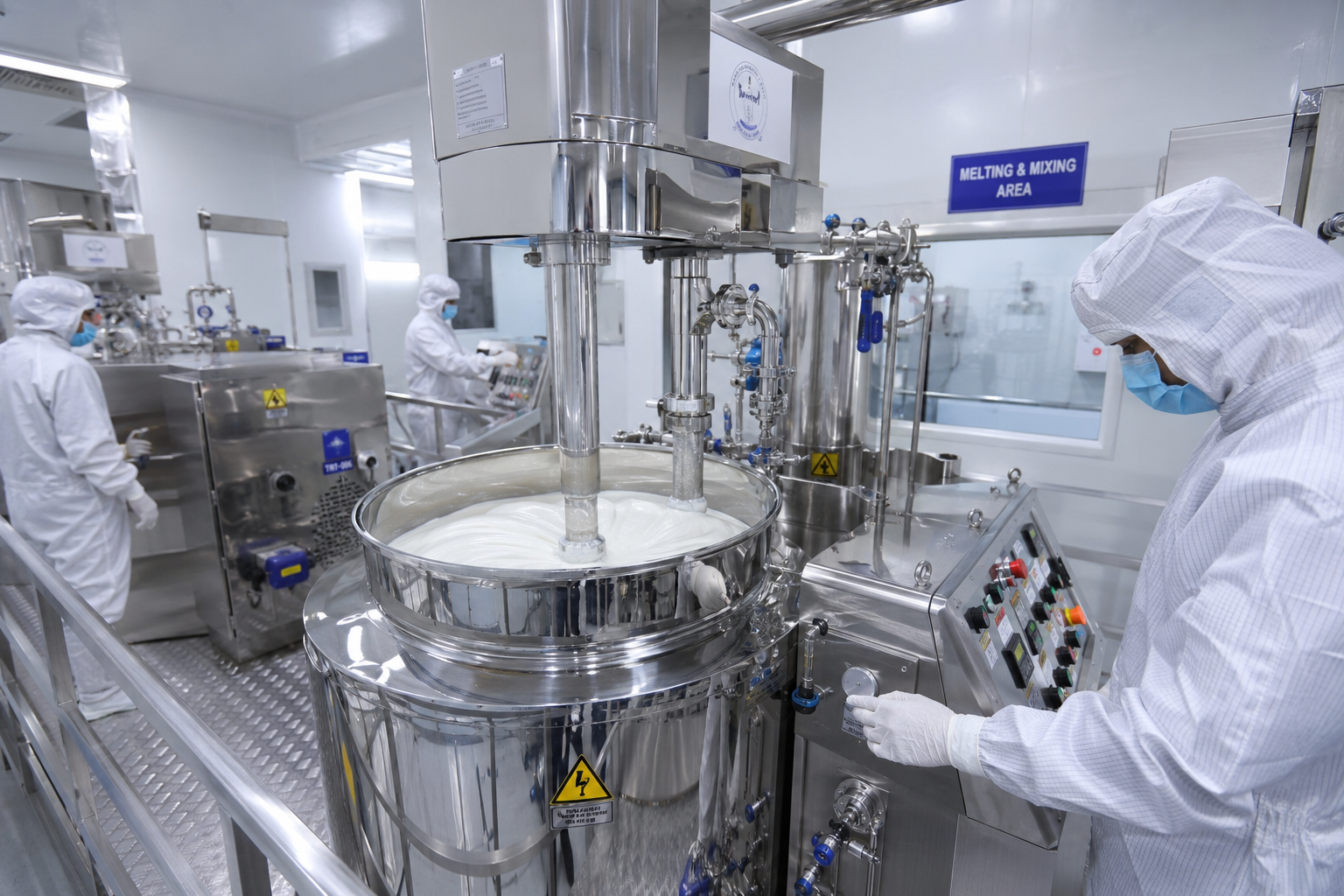
5. Pharmaceutical Tablet Manufacturing Process
Tablet manufacturing involves several stages designed to produce consistent pharmaceutical dosage forms.
The manufacturing process depends on the formulation, active ingredient properties, excipient selection and required tablet characteristics.
Step 1: Raw Material Dispensing
Active pharmaceutical ingredients and excipients are dispensed according to the approved manufacturing formula.
Material identity, quality status and required quantities are verified before processing.
Step 2: Sifting
Raw materials may undergo sifting to remove unwanted particles and obtain suitable particle-size distribution.
Step 3: Granulation
Granulation is performed where required to improve powder flow and compressibility.
Two common approaches include:
-
Wet Granulation.
-
Dry Granulation.
Some formulations may use direct compression without a granulation stage.
Step 4: Drying
For wet granulation processes, granules are dried under controlled conditions to achieve the required moisture content.
Step 5: Milling and Blending
Dried granules may undergo milling to achieve suitable particle-size distribution.
The materials are subsequently blended according to the approved manufacturing procedure.
Step 6: Lubrication
Suitable lubricants and other final-blend excipients are added to support smooth tablet compression and reduce manufacturing problems.
Step 7: Tablet Compression
The final blend is compressed using suitable tablet compression equipment.
Important process parameters include:
-
Tablet weight.
-
Hardness.
-
Thickness.
-
Compression force.
-
Disintegration characteristics.
-
Friability.
Step 8: Tablet Coating
Where required, tablets undergo film coating, sugar coating or specialized coating according to the approved formulation.
Step 9: Quality Control
Finished tablets undergo applicable quality-control testing before release.
Step 10: Packaging
Approved tablets are packed using suitable primary and secondary packaging materials according to product requirements.
6. Quality Control Tests for Pharmaceutical Tablets
Quality control is an important part of pharmaceutical tablet manufacturing.
Different tests are performed to evaluate the physical, chemical and performance characteristics of finished tablets.
Common quality-control tests include:
Description and Appearance: Evaluates the physical appearance, color, shape and other specified characteristics.
Identification: Confirms the identity of the active pharmaceutical ingredient using appropriate analytical methods.
Average Weight and Weight Variation: Evaluates tablet weight consistency.
Hardness Testing: Measures tablet crushing strength.
Friability Testing: Evaluates the tablet's resistance to mechanical abrasion and handling.
Disintegration Testing: Determines the time required for tablets to break down under specified test conditions.
Dissolution Testing: Evaluates the release of the active ingredient under specified test conditions.
Assay: Determines the quantity of active pharmaceutical ingredient present.
Content Uniformity: Evaluates the consistency of active ingredient content between individual dosage units, where applicable.
Related Substances: Evaluates specified impurities and degradation products.
Moisture Content: Evaluates moisture levels where relevant to product quality and stability.
The applicable tests and acceptance criteria depend on the individual product, approved specification and relevant pharmacopoeial requirements.
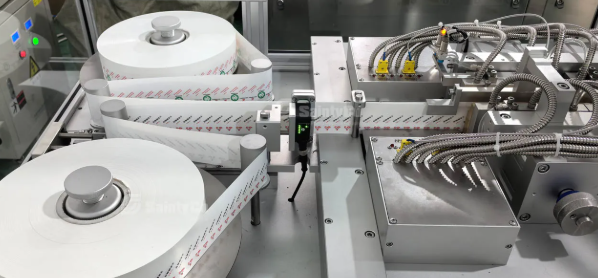
7. Pharmaceutical Tablet Packaging Options
Packaging plays an important role in protecting pharmaceutical tablets from environmental exposure, physical damage and contamination.
Different packaging configurations are selected according to the formulation, shelf-life requirements, market and regulatory specifications.
Common packaging options include:
Blister Packaging
-
PVC-Aluminium Blister.
-
Alu-Alu Blister.
-
Other suitable barrier blister configurations.
Strip Packaging
-
Aluminium Strip Packaging.
-
Suitable pharmaceutical barrier films.
Bottle Packaging
-
HDPE Bottles.
-
Suitable pharmaceutical plastic containers.
-
Desiccant-containing packaging where required.
Secondary Packaging
-
Printed Pharmaceutical Cartons.
-
Package Inserts.
-
Product Information Leaflets.
-
Export-Specific Labels.
Pack sizes may include 1 × 10, 10 × 10, 3 × 10, 1 × 4 and other configurations depending on the product.
8. Pharmaceutical Tablet Third-Party Manufacturing in India
Third-party tablet manufacturing is an important business model for pharmaceutical companies, distributors and international buyers interested in marketing pharmaceutical products under their own brands.
Global Entra Pharma evaluates tablet manufacturing enquiries through suitable manufacturing partners according to product requirements and manufacturing availability.
Third-party manufacturing enquiries may cover:
-
Conventional Tablets.
-
Film-Coated Tablets.
-
Uncoated Tablets.
-
Dispersible Tablets.
-
Chewable Tablets.
-
Other specialized tablet formulations.
The manufacturing arrangement depends on product availability, formulation feasibility, manufacturing authorization and destination-market requirements.
Buyers can share the following details:
-
Product Name.
-
Active Pharmaceutical Ingredient.
-
Required Strength.
-
Tablet Type.
-
Required Quantity.
-
Brand Name.
-
Packaging Configuration.
-
Target Country.
-
Regulatory Documentation Requirements.
Minimum order quantities, commercial quotations and production lead times are confirmed after evaluating the product requirements.
9. Private Label Pharmaceutical Tablet Manufacturing
Private-label tablet manufacturing allows pharmaceutical companies and distributors to market suitable pharmaceutical formulations under their own brands.
The arrangement can include:
-
Product selection.
-
Brand name coordination.
-
Tablet strength and formulation specifications.
-
Primary packaging.
-
Carton artwork.
-
Product labeling.
-
Package inserts.
-
Export documentation coordination.
Private-label projects must comply with the applicable manufacturing, product registration and labeling requirements of the destination market.
10. Pharmaceutical Tablet Manufacturer and Exporter from India
India is an important pharmaceutical manufacturing and sourcing destination for international pharmaceutical buyers.
Global Entra Pharma focuses on pharmaceutical tablet sourcing, manufacturing coordination and export enquiries for international B2B customers.
Our target markets include:
African Markets:
Nigeria, Ghana, Kenya, Uganda, Tanzania, Zambia, Zimbabwe, South Africa, Ethiopia, Malawi, Mozambique, Rwanda, Cameroon, Senegal, Botswana, Namibia, Sierra Leone, Liberia and Democratic Republic of the Congo.
Middle Eastern Markets:
United Arab Emirates, Jordan, Saudi Arabia, Iraq, Oman and other regional markets, subject to applicable product registration and import requirements.
Other International Markets:
Selected Asian, CIS and Latin American markets according to product availability and applicable regulatory requirements.
Global Entra Pharma supports pharmaceutical enquiries from international importers, distributors, wholesalers and procurement organizations.
11. Pharmaceutical Tablet Export Documentation
Pharmaceutical tablet exports require appropriate technical, regulatory and commercial documentation.
Depending on the destination country and product registration pathway, relevant documents may include:
-
WHO-GMP Certificate or applicable GMP documentation.
-
Manufacturing License.
-
Certificate of Analysis.
-
Product Specifications.
-
Stability Study Reports.
-
Product Registration Dossier.
-
Certificate of Pharmaceutical Product (CPP/COPP), where applicable.
-
Free Sale Certificate, where applicable.
-
Manufacturing Authorization.
-
Packaging Artwork.
-
Product Information Leaflet.
-
Commercial Invoice.
-
Packing List.
-
Certificate of Origin.
The required documentation varies according to the product, importing country and regulatory authority.
12. Why Choose Global Entra Pharma for Pharmaceutical Tablets?
Global Entra Pharma focuses on pharmaceutical dosage forms and international B2B pharmaceutical business requirements.
Our tablet-related business services include:
Multiple Pharmaceutical Formulations: Enquiries across antibiotic, analgesic, gastrointestinal, cardiovascular, antidiabetic, antiallergic and other tablet categories.
Third-Party Manufacturing: Manufacturing coordination for suitable pharmaceutical tablet formulations.
Private Label Manufacturing: Customized pharmaceutical branding and packaging arrangements.
Product Sourcing: Evaluation of product requirements according to buyer specifications.
Export Coordination: Commercial quotations, documentation discussions and international shipment coordination.
International Markets: Pharmaceutical supply enquiries from African, Middle Eastern and other international markets.
Our objective is to establish long-term business relationships with pharmaceutical importers, distributors and international buyers through reliable communication and suitable pharmaceutical supply arrangements.
13. Frequently Asked Questions About Pharmaceutical Tablets
1. What are the different types of pharmaceutical tablets?
Major types include uncoated tablets, film-coated tablets, sugar-coated tablets, enteric-coated tablets, chewable tablets, dispersible tablets, effervescent tablets, orally disintegrating tablets, sublingual tablets, buccal tablets, sustained-release tablets, extended-release tablets and bilayer tablets.
2. What is the difference between coated and uncoated tablets?
Uncoated tablets do not have an additional coating layer, whereas coated tablets contain an external coating applied for purposes such as taste masking, appearance, protection or modified release.
3. What are film-coated tablets?
Film-coated tablets have a thin polymer-based coating that can improve appearance, handling and protection of the formulation.
4. What are enteric-coated tablets?
Enteric-coated tablets are designed to resist disintegration in gastric conditions and release their contents under suitable intestinal conditions.
5. What are sustained-release tablets?
Sustained-release tablets are formulated to release the active pharmaceutical ingredient over an extended period compared with conventional immediate-release formulations.
6. What are dispersible tablets?
Dispersible tablets are designed to disperse in a specified volume of liquid before administration.
7. What are chewable tablets?
Chewable tablets are intended to be chewed before swallowing and are commonly formulated with suitable flavoring and sweetening agents.
8. What are bilayer tablets?
Bilayer tablets contain two separate compressed layers and may be used for combination formulations or specialized drug-release requirements.
9. What quality-control tests are performed on pharmaceutical tablets?
Common tests include appearance, weight variation, hardness, friability, disintegration, dissolution, assay, content uniformity and related-substance testing, depending on the product specification.
10. Can pharmaceutical tablets be manufactured under a private label?
Yes. Suitable pharmaceutical tablets can be evaluated for private-label manufacturing arrangements through authorized manufacturing partners, subject to product availability and applicable regulations.
11. Can pharmaceutical tablets be exported from India to African countries?
Yes. Pharmaceutical tablets can be exported to eligible international markets, subject to applicable product registration, manufacturing, import and export requirements.
12. How can international buyers request a tablet manufacturing quotation?
Buyers can share the product name, composition, strength, required quantity, packaging configuration and destination country to request a commercial quotation.
14. Contact Global Entra Pharma for Pharmaceutical Tablet Supply and Manufacturing Enquiries
Are you a pharmaceutical importer, distributor, wholesaler or pharmaceutical company looking for pharmaceutical tablets from India?
Global Entra Pharma welcomes enquiries for different pharmaceutical tablet formulations, strengths and packaging configurations.
Whether you require conventional tablets, film-coated tablets, combination formulations or specialized tablet dosage forms, our team can evaluate your requirements and discuss suitable manufacturing and supply arrangements.
Share your product list, required quantities, strengths, packaging preferences and destination country to discuss commercial quotations and pharmaceutical export opportunities.
Global Entra Pharma
Vadodara, Gujarat, India
Website: https://www.globalentrapharma.in
Email: sales@globalentrapharma.in
Phone / WhatsApp: +91 6351494384
Global Entra Pharma – Pharmaceutical Tablet Sourcing, Manufacturing Coordination and Export Solutions for African and International Markets.