Suppository Manufacturing Process – Complete Step-by-Step Guide
Introduction to Suppository Manufacturing
Suppositories are solid pharmaceutical dosage forms designed for insertion into body cavities, primarily the rectum or vagina, where they melt, soften or dissolve to release the active pharmaceutical ingredient (API).
Suppositories are commonly developed for local or systemic drug delivery. Rectal suppositories may be used for pain relief, fever management, constipation and other therapeutic applications. Vaginal suppositories, also known as vaginal ovules or pessaries depending on their formulation and physical characteristics, are used for applications such as antifungal treatment, antibacterial treatment and other local therapies.
The pharmaceutical suppository manufacturing process requires careful control over formulation, temperature, mixing, mould filling, cooling and finished-product quality. Unlike conventional tablet manufacturing, suppository production depends significantly on the physical characteristics of the suppository base and its compatibility with the active ingredient.
Manufacturers must select appropriate raw materials, establish suitable processing parameters and perform product-specific quality control tests to ensure consistent dosage, physical stability and performance.
1. Selection of Active Pharmaceutical Ingredients
The first step in suppository manufacturing is selecting the appropriate active pharmaceutical ingredient according to the intended therapeutic application.
The API must be compatible with the selected suppository base and suitable for incorporation into the formulation.
Examples of pharmaceutical ingredients used in suppository formulations include:
Rectal suppositories:
-
Paracetamol
-
Diclofenac sodium
-
Glycerin
-
Bisacodyl
-
Other suitable analgesic, antipyretic or therapeutic ingredients
Vaginal suppositories and ovules:
-
Clotrimazole
-
Metronidazole
-
Miconazole
-
Progesterone
-
Other suitable antifungal, antibacterial or hormonal ingredients
The selection of an API depends on its intended use, solubility, stability, dose, compatibility and applicable regulatory requirements.
2. Selection of Suppository Base
The suppository base is one of the most important components of the formulation. It provides the structure of the dosage form and helps release the active ingredient after administration.
The base should have suitable melting, softening or dissolution characteristics, depending on the formulation design.
Common suppository bases include:
A. Hard Fat Base
Hard fat is a commonly used lipid-based suppository base. It generally melts at body temperature and releases the incorporated active ingredient.
Important characteristics include:
-
Suitable melting characteristics
-
Good mouldability
-
Compatibility with selected APIs
-
Appropriate physical stability
-
Suitable release characteristics
B. Polyethylene Glycol (PEG) Base
Polyethylene glycol bases are water-soluble bases used in certain rectal and vaginal formulations.
Their properties can be adjusted by combining different molecular-weight grades.
Important characteristics include:
-
Water-soluble composition
-
Adjustable consistency
-
Different dissolution characteristics
-
Suitability for selected APIs
C. Glycerinated Gelatin Base
Glycerinated gelatin is another type of suppository base, particularly used in certain vaginal formulations.
It generally dissolves gradually in body fluids rather than melting in the same manner as lipid-based bases.
The final base selection depends on the intended route of administration, API characteristics, product performance and stability requirements.
3. Dispensing and Weighing of Raw Materials
After finalising the formulation, the required raw materials are dispensed according to the approved batch manufacturing formula.
Materials may include:
-
Active pharmaceutical ingredients
-
Suppository base
-
Emulsifying agents
-
Wetting agents
-
Antioxidants
-
Preservatives, where required
-
Other approved excipients
Each material should be checked against its approved specification before use.
Important activities include:
-
Verification of material identity.
-
Checking batch numbers and expiry or retest dates.
-
Reviewing the certificate of analysis.
-
Accurate weighing of each ingredient.
-
Recording dispensing details in the batch manufacturing record.
-
Ensuring material traceability.
Dispensing operations should be performed according to approved procedures and applicable GMP requirements.
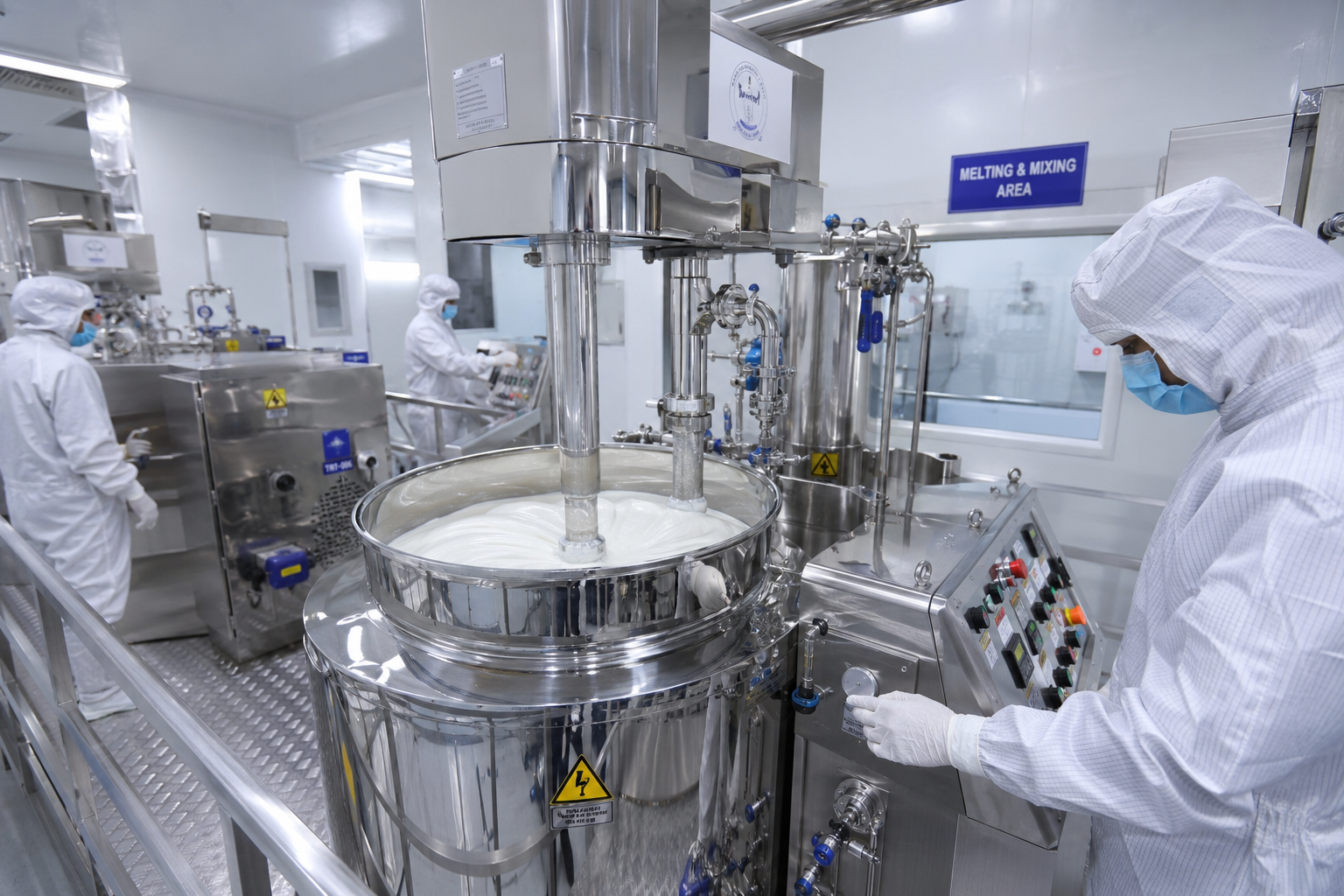
4. Preparation and Melting of Suppository Base
The selected suppository base is transferred into a suitable manufacturing vessel.
For heat-processable bases, controlled heating is used to achieve a suitable molten condition.
The temperature must be carefully controlled because excessive heating can affect the physical properties of the base and may cause degradation of sensitive ingredients.
Important considerations include:
-
Melting temperature of the selected base.
-
Heating rate.
-
Mixing conditions.
-
Temperature uniformity.
-
Prevention of overheating.
-
Avoidance of unnecessary holding time.
The manufacturing temperature should be established through formulation development and process validation or other appropriate process qualification activities.
5. Incorporation of Active Pharmaceutical Ingredients
Once the base reaches the required processing condition, the active pharmaceutical ingredient is incorporated according to the approved manufacturing procedure.
The method of incorporation depends on the solubility and physical characteristics of the API.
A. Incorporation of Soluble Ingredients
If the API is soluble in the selected base or compatible formulation phase, it may be incorporated through controlled mixing.
The objective is to obtain a uniform distribution throughout the formulation.
B. Incorporation of Insoluble Ingredients
If the API is insoluble in the base, it may need to be dispersed uniformly.
Particle size, wetting properties, mixing conditions and suspension stability become important considerations.
Inadequate dispersion can result in non-uniform drug distribution and inconsistent drug content between individual suppositories.
C. Use of Suitable Excipients
Depending on the formulation, wetting agents, emulsifiers or other excipients may be used to improve dispersion and formulation performance.
The selection of these excipients should be supported by formulation development and compatibility studies.
6. Mixing and Homogenization
After API incorporation, the formulation is mixed under controlled conditions to achieve uniformity.
Mixing is an important stage because the active ingredient must remain consistently distributed throughout the bulk formulation.
Key process parameters include:
-
Mixing speed.
-
Mixing duration.
-
Product temperature.
-
Mixing sequence.
-
Viscosity of the formulation.
-
Homogeneity of the bulk mixture.
For formulations containing suspended APIs, continuous or controlled agitation may be necessary during mould filling to minimise sedimentation.
The mixing process should be designed according to the formulation's physical properties and validated manufacturing requirements.
7. Suppository Mould Preparation
Suppository moulds are prepared before the filling operation.
Moulds determine the final shape, dimensions and nominal capacity of the suppositories.
They may be designed for different product shapes and fill weights depending on the intended dosage form.
Before production, the moulds should be checked for:
-
Cleanliness.
-
Physical condition.
-
Correct mould size.
-
Proper assembly.
-
Suitability for the selected formulation.
-
Appropriate release characteristics.
The mould capacity and actual fill weight should be established during product development.
8. Filling of Suppository Moulds
The prepared formulation is transferred to the moulding or filling system.
The molten or processable formulation is filled into individual mould cavities using suitable equipment.
The filling operation must be controlled to maintain consistent weight and avoid defects.
Important parameters include:
-
Filling temperature.
-
Filling speed.
-
Fill volume.
-
Bulk formulation homogeneity.
-
Mould temperature.
-
Prevention of air entrapment.
-
Uniform filling of cavities.
The filling process should be monitored to ensure that each mould cavity receives the required quantity of formulation.
9. Cooling and Solidification
After filling, the moulds are transferred to a controlled cooling environment.
The formulation undergoes solidification or setting depending on the type of suppository base.
Cooling conditions are important because improper cooling may cause:
-
Surface cracks.
-
Deformation.
-
Shrinkage defects.
-
Air pockets.
-
Uneven solidification.
-
Physical instability.
The cooling temperature and duration should be established based on the formulation and manufacturing equipment.
Controlled cooling helps maintain the physical shape and appearance of the finished suppositories.
10. Demoulding and Inspection
Once the formulation has sufficiently solidified, the suppositories are removed from the moulds or separated from the moulding system.
The products are inspected for visible defects and physical irregularities.
Typical inspection parameters include:
-
Shape and appearance.
-
Surface smoothness.
-
Cracks or breakage.
-
Deformation.
-
Air bubbles.
-
Leakage or filling defects.
-
Colour uniformity.
Products that do not meet approved acceptance criteria should be handled according to the applicable quality procedures.
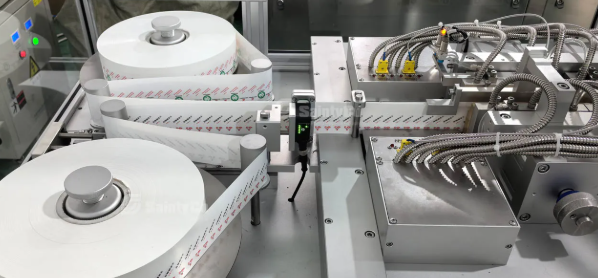
11. Primary Packaging of Suppositories
After inspection, suppositories are transferred to the primary packaging stage.
Packaging selection depends on the formulation, product stability, protection requirements and intended market.
Common packaging formats include:
-
PVC blister packaging.
-
PVC-aluminium blister packaging.
-
Aluminium strip packaging.
-
Other suitable pharmaceutical packaging systems.
The packaging material should provide appropriate protection against moisture, contamination, physical damage and other environmental factors.
The compatibility of the packaging material with the formulation should be evaluated.
12. Secondary Packaging and Labelling
After primary packaging, the units are packed into cartons along with the required package insert or leaflet, where applicable.
Secondary packaging information may include:
-
Product name.
-
Active ingredient and strength.
-
Dosage form.
-
Pack size.
-
Batch number.
-
Manufacturing date.
-
Expiry date.
-
Storage conditions.
-
Manufacturer details.
-
Marketing authorisation holder or exporter details, where applicable.
-
Country-specific regulatory information.
For export products, artwork and labelling must comply with the importing country's applicable requirements and approved registration details.
13. Quality Control Testing of Suppositories
Quality control testing is essential to confirm that the finished product meets its approved specifications.
The specific tests depend on the formulation, pharmacopoeial requirements, product registration and intended application.
Common quality control tests include:
A. Appearance and Physical Inspection
The suppositories are checked for colour, shape, surface condition and visible defects.
B. Uniformity of Mass
Individual units are weighed to assess variation in mass.
The applicable acceptance criteria depend on the relevant pharmacopoeia or approved product specification.
C. Content Uniformity
This test evaluates whether the active pharmaceutical ingredient is distributed consistently among individual units, where required.
D. Assay
Assay determines the quantity of active pharmaceutical ingredient present in the finished product.
E. Disintegration or Dissolution Testing
Depending on the formulation and applicable requirements, the product may be evaluated for disintegration, dissolution or another suitable performance characteristic.
F. Melting or Softening Characteristics
For lipid-based formulations, melting or softening behaviour may be evaluated using an appropriate method.
G. Liquefaction Time
Certain suppository formulations may be evaluated for liquefaction characteristics under specified conditions.
H. Microbial Quality
Microbiological testing is performed according to the product type and applicable requirements.
I. Stability Testing
Stability studies evaluate how product quality changes under defined storage conditions over time.
Testing requirements and acceptance limits should always be based on the applicable product specification and regulatory standards.
14. Important Equipment Used in Suppository Manufacturing
Suppository production requires specialised equipment for melting, mixing, filling, cooling, inspection and packaging.
Commonly used equipment includes:
1. Manufacturing Vessel
Used for preparing and processing the suppository base and bulk formulation.
2. Heating System
Provides controlled heating for melting and maintaining the required processing temperature.
3. Mixing System
Ensures uniform incorporation and distribution of ingredients.
4. Homogenizer
Used where required to improve dispersion and uniformity of the formulation.
5. Suppository Moulding Machine
Used to fill the formulation into mould cavities and produce individual suppositories.
6. Cooling System
Provides controlled cooling for solidification of the formulation.
7. Inspection Equipment
Supports visual inspection and identification of defective units.
8. Blister Packaging Machine
Used for primary packaging of individual suppositories.
9. Cartoning Machine
Used for secondary packaging and carton preparation.
Equipment selection depends on production capacity, dosage form, formulation characteristics and packaging requirements.
15. Critical Process Parameters in Suppository Manufacturing
Several manufacturing parameters can influence the quality and consistency of the finished product.
|
Manufacturing stage |
Important parameters |
|---|---|
|
Base preparation |
Heating temperature, melting time |
|
API incorporation |
Addition sequence, temperature |
|
Mixing |
Speed, duration, uniformity |
|
Mould filling |
Filling temperature, fill quantity |
|
Cooling |
Cooling temperature, cooling time |
|
Demoulding |
Solidification condition |
|
Packaging |
Sealing integrity, packaging compatibility |
These parameters should be evaluated during formulation development and manufacturing process qualification.
Changes in critical manufacturing conditions should be assessed through the applicable change-control system.
16. Documentation Required for Suppository Manufacturing
Pharmaceutical manufacturing requires appropriate documentation to maintain traceability and demonstrate compliance with applicable GMP requirements.
Common documents include:
-
Master Formula Record (MFR).
-
Batch Manufacturing Record (BMR).
-
Batch Packaging Record (BPR).
-
Raw material specifications.
-
Raw material certificates of analysis.
-
Finished product specifications.
-
Standard Operating Procedures (SOPs).
-
Equipment cleaning records.
-
Equipment qualification documents.
-
Process validation or qualification records.
-
Quality control test reports.
-
Stability study protocols and reports.
-
Deviation and change-control records.
-
Batch release documentation.
The exact documentation requirements depend on the manufacturing site, product type and applicable regulatory framework.
17. Third-Party Suppository Manufacturing
Pharmaceutical companies, distributors, importers and international buyers may use third-party manufacturing arrangements to source suppositories without establishing their own manufacturing facility.
Under this model, an eligible pharmaceutical manufacturer produces the product according to agreed specifications and applicable licensing arrangements.
Global Entra Pharma supports pharmaceutical buyers through product sourcing, third-party manufacturing coordination and export-related assistance for suitable pharmaceutical dosage forms.
Depending on product requirements and manufacturing partner capabilities, enquiries may include:
-
Paracetamol suppositories.
-
Diclofenac suppositories.
-
Glycerin suppositories.
-
Clotrimazole vaginal ovules.
-
Metronidazole vaginal formulations.
-
Other rectal and vaginal dosage forms.
Product availability, strengths, minimum order quantities, packaging options and manufacturing timelines are subject to technical feasibility and confirmation from the relevant manufacturing partner.
18. Export Requirements for Suppositories
Suppositories supplied to international markets must meet the applicable regulatory requirements of the importing country.
Depending on the destination and product classification, buyers may require documents such as:
-
Certificate of Analysis (COA).
-
Certificate of Pharmaceutical Product (COPP), where applicable.
-
Free Sale Certificate (FSC), where applicable.
-
Manufacturing licence.
-
GMP certificate.
-
Product specifications.
-
Stability data.
-
Manufacturing and packaging details.
-
Product registration documents.
-
Certificate of Origin.
-
Commercial invoice and packing list.
-
Other country-specific regulatory documents.
Requirements differ between countries and products. Importers should confirm the applicable registration, import permit, labelling and documentation requirements with their local regulatory authority.
Global Entra Pharma supports pharmaceutical buyers across African and other international markets with sourcing and export coordination, subject to local import, registration and regulatory requirements.
19. Factors Affecting Suppository Manufacturing Cost
The cost of suppository manufacturing depends on multiple technical and commercial factors.
Major factors include:
1. Active Pharmaceutical Ingredient: API cost varies according to the ingredient, strength, grade and supplier.
2. Suppository Base: The type and quantity of base affect formulation cost.
3. Dosage Strength: Higher API quantities may influence the total formulation cost.
4. Manufacturing Batch Size: Production volume and minimum batch requirements can affect unit cost.
5. Packaging Material: PVC, aluminium and other packaging options have different costs.
6. Quality Control Requirements: Product-specific testing and documentation influence the overall manufacturing cost.
7. Regulatory Requirements: Registration, stability and market-specific documentation requirements may add to the project cost.
8. Order Quantity: Larger commercial orders may offer different manufacturing economics compared with smaller batches.
Buyers should provide the product composition, strength, packaging requirement, destination country and estimated quantity to obtain a meaningful quotation.
Frequently Asked Questions (FAQs)
1. What is the suppository manufacturing process?
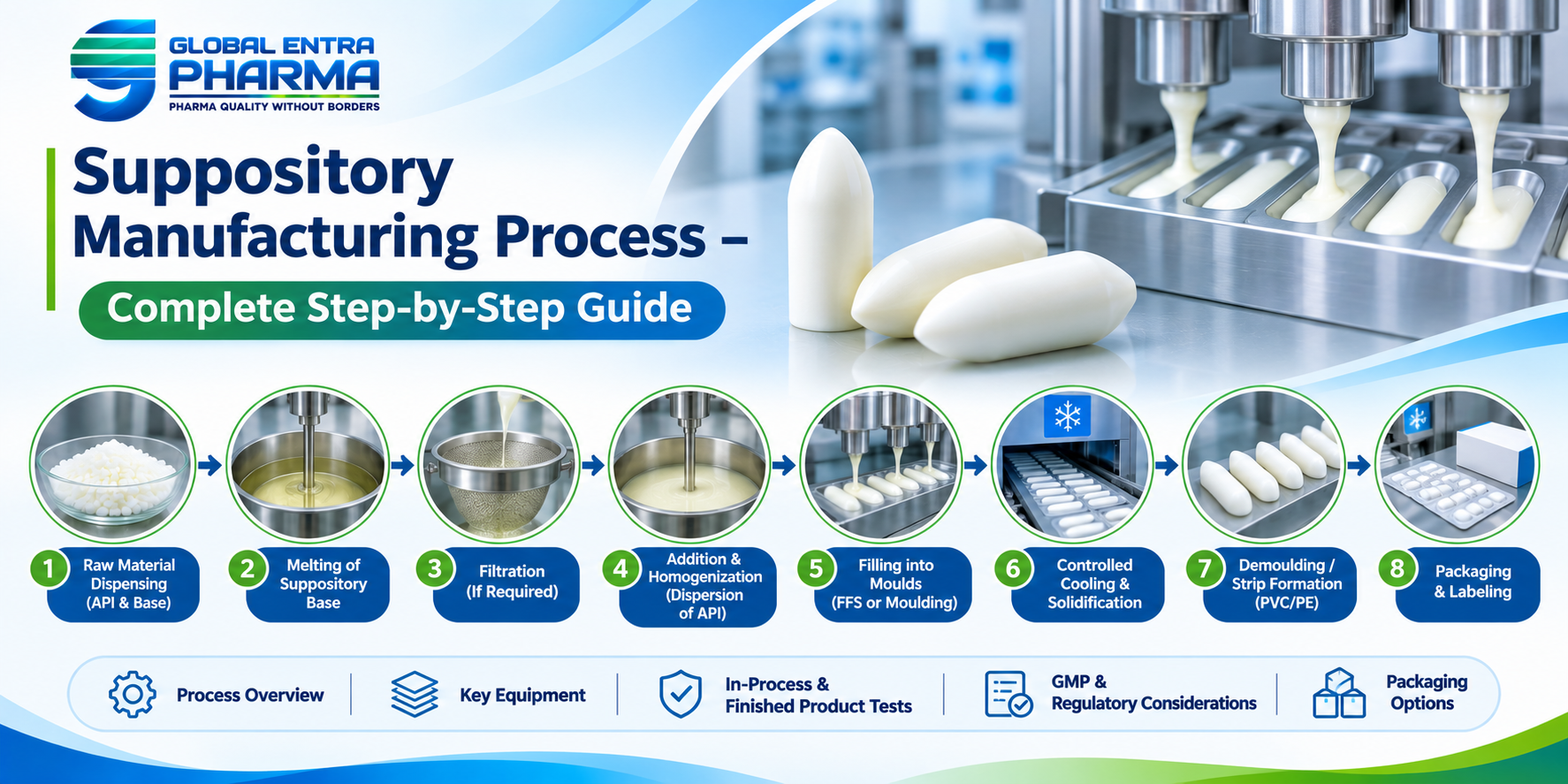
The suppository manufacturing process generally involves raw material dispensing, base preparation, API incorporation, mixing, mould filling, cooling, demoulding, inspection, quality control and packaging.
2. Which bases are used in suppository manufacturing?
Common bases include hard fat, polyethylene glycol and glycerinated gelatin. The selection depends on the formulation, intended route of administration and required product characteristics.
3. Which machines are required for suppository manufacturing?
Common equipment includes a manufacturing vessel, heating system, mixing equipment, homogenizer where required, suppository moulding machine, cooling system and packaging machines.
4. How are suppositories filled into moulds?
The prepared formulation is transferred into mould cavities using suitable filling equipment. Filling conditions are controlled to maintain consistent fill quantity and product uniformity.
5. What quality control tests are performed on suppositories?
Common tests include appearance, uniformity of mass, assay, content uniformity where required, disintegration or dissolution, melting or softening characteristics, microbial quality and stability testing.
6. What is the difference between rectal and vaginal suppository manufacturing?
Both dosage forms may use similar manufacturing principles, but their formulations, dimensions, performance requirements, excipients and quality specifications can differ according to the intended route of administration.
7. Can suppositories be manufactured through third-party manufacturing?
Yes. Eligible pharmaceutical manufacturers may undertake third-party manufacturing according to agreed product specifications and applicable licensing and regulatory requirements.
8. Can suppositories be exported from India?
Suppositories can be exported from India subject to applicable Indian export requirements and the importing country's product registration, import and documentation requirements.
9. What information is required to obtain a suppository manufacturing quotation?
Buyers should provide the product name, composition, strength, dosage form, pack size, packaging requirements, order quantity and destination country.
Suppository Manufacturing and Export Solutions by Global Entra Pharma
Global Entra Pharma, based in Vadodara, Gujarat, India, supports pharmaceutical buyers, distributors, importers and businesses looking for pharmaceutical product sourcing, third-party manufacturing coordination and export solutions.
Our product enquiries cover rectal suppositories, vaginal suppositories, pessaries, ovules, creams, ointments, tablets, capsules and other suitable pharmaceutical dosage forms through manufacturing partners.
We work with buyers to understand their product specifications, strengths, packaging requirements, target markets and commercial quantities.
For manufacturing and export enquiries, contact Global Entra Pharma.
Website: https://www.globalentrapharma.in