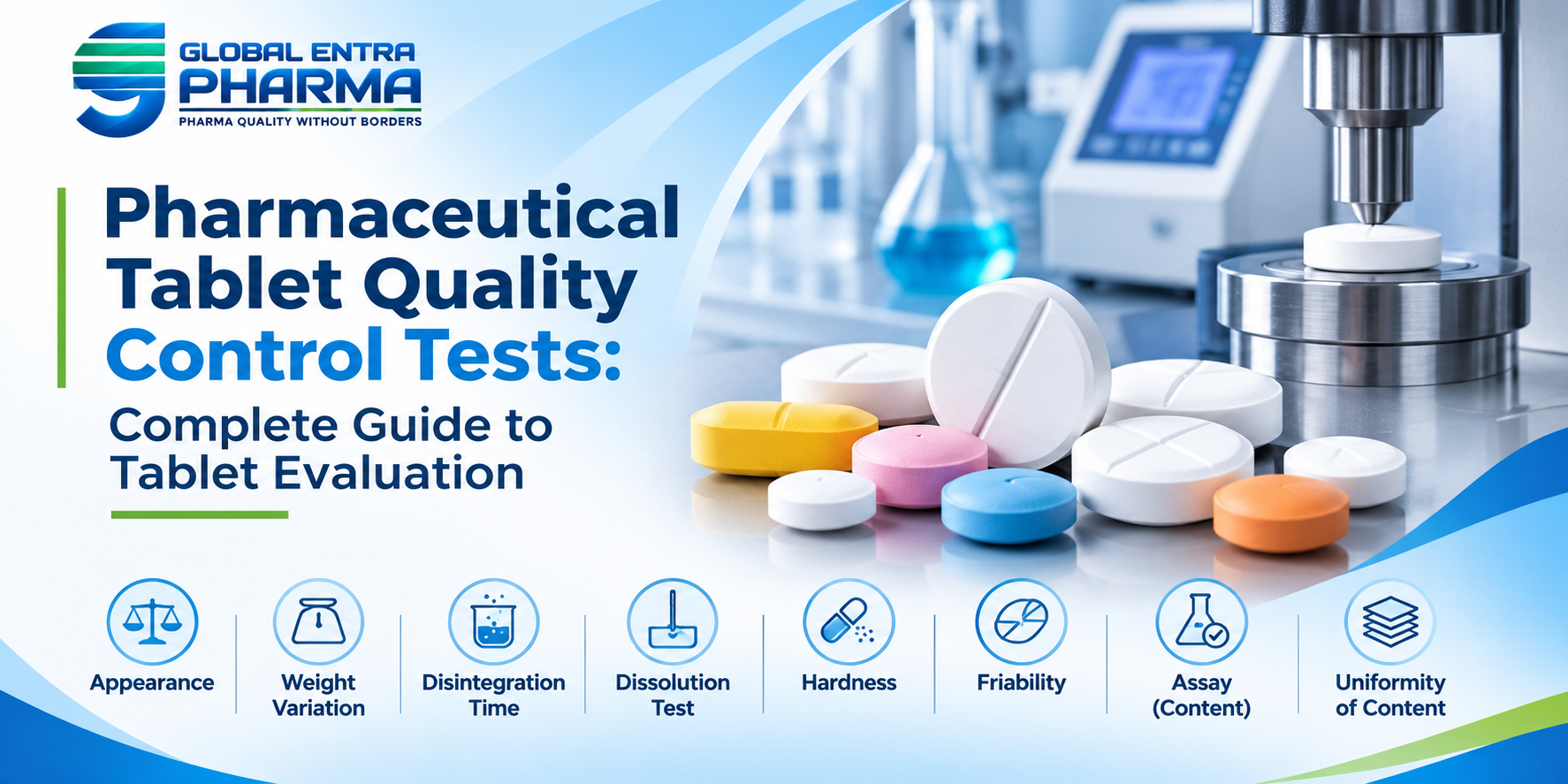
Pharmaceutical Tablet Quality Control Tests: Complete Guide to Tablet Evaluation
Pharmaceutical tablet quality control is an essential part of pharmaceutical manufacturing. Tablets must meet established quality specifications to ensure consistency, strength, purity, stability and appropriate drug-release characteristics.
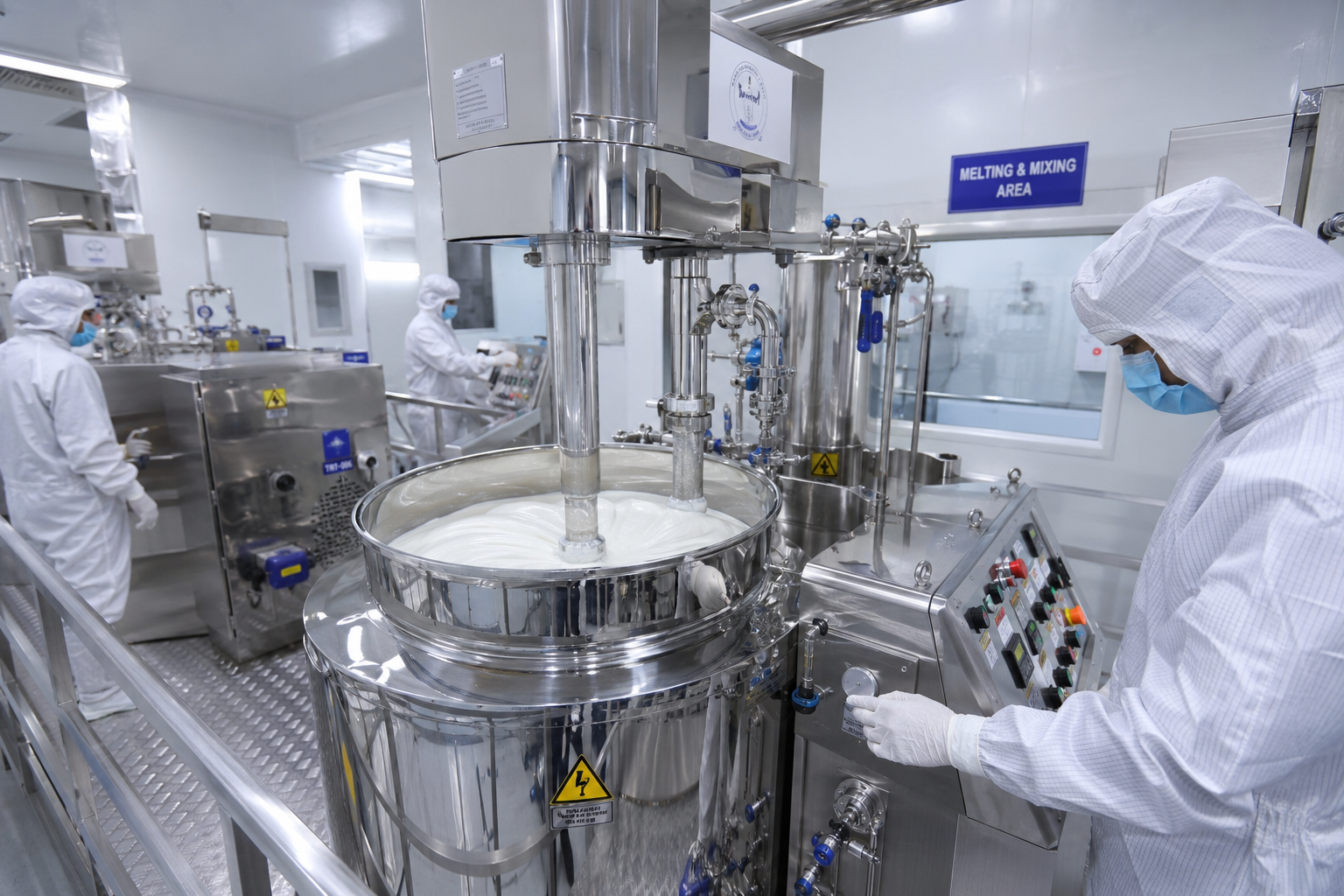
Quality control testing evaluates the physical, chemical and performance properties of pharmaceutical tablets throughout manufacturing and before finished-product release.
Pharmaceutical manufacturers follow applicable pharmacopoeial standards, approved product specifications and Good Manufacturing Practices (GMP) to maintain consistent product quality.
Global Entra Pharma focuses on pharmaceutical tablet sourcing, manufacturing coordination, private-label manufacturing and export solutions for international pharmaceutical buyers. Understanding tablet quality requirements is important for pharmaceutical importers, distributors and procurement organizations when evaluating finished pharmaceutical products from India.
1. What Is Pharmaceutical Tablet Quality Control?
Pharmaceutical tablet quality control is the process of evaluating tablets against predefined quality specifications.
The testing process helps determine whether a tablet formulation meets its approved requirements for identity, strength, purity, physical characteristics and performance.
Quality control activities generally involve:
-
Raw material testing.
-
In-process quality control.
-
Finished-product testing.
-
Packaging material evaluation.
-
Stability testing.
-
Documentation and batch release review.
The selection of tests depends on the formulation, dosage form, pharmacopoeial requirements and approved product specifications.
2. Important Pharmaceutical Tablet Quality Control Tests
A. Appearance and Description Test
Appearance testing is one of the basic evaluations performed on pharmaceutical tablets.
It involves examining the physical characteristics of tablets to identify visible defects or inconsistencies.
Parameters may include:
-
Tablet color.
-
Shape and size.
-
Surface appearance.
-
Coating uniformity.
-
Identification markings.
-
Cracks or chips.
-
Capping and lamination.
-
Surface defects.
Tablets should comply with the approved description and appearance specifications.
B. Average Weight and Weight Variation Test
Weight variation testing evaluates the consistency of individual tablet weights within a batch.
The test generally involves weighing a specified number of tablets individually and calculating their average weight.
The individual weights are compared against the applicable acceptance criteria.
Importance of weight variation testing:
-
Evaluates compression consistency.
-
Identifies possible filling variations.
-
Helps monitor tablet manufacturing performance.
-
Supports batch-to-batch consistency.
Weight variation acceptance criteria depend on the applicable pharmacopoeia and tablet specifications.
C. Hardness Test
Tablet hardness testing evaluates the mechanical strength of tablets.
It determines the force required to break or crush a tablet under specified testing conditions.
Hardness testing is important because tablets must have sufficient mechanical strength to withstand manufacturing, packaging, transportation and handling.
Common hardness testing equipment includes:
-
Monsanto Hardness Tester.
-
Pfizer Hardness Tester.
-
Digital Tablet Hardness Tester.
-
Automated Tablet Testing Systems.
Hardness results are generally expressed in Newtons or other instrument-specific units.
The appropriate hardness specification depends on the formulation and intended tablet performance.
D. Friability Test
Friability testing evaluates the resistance of tablets to mechanical abrasion and physical damage.
The test is commonly performed using a Roche Friabilator or an equivalent suitable instrument.
A specified quantity of tablets is weighed before testing and placed inside a rotating friability drum.
After the specified test cycle, the tablets are removed, dedusted and weighed again.
Friability is calculated using the difference between the initial and final weights.
Friability percentage:
Friability (%) = [(Initial Weight − Final Weight) / Initial Weight] × 100
The commonly used acceptance criterion for many conventional uncoated tablets is not more than 1.0%, although the applicable product specification and pharmacopoeial requirements must always be followed.
E. Disintegration Test
Disintegration testing determines the time required for a tablet to break down into smaller particles under specified testing conditions.
The test is generally performed using a disintegration test apparatus.
The apparatus contains a basket-rack assembly with specified tubes and suitable testing conditions.
Important parameters include:
-
Disintegration medium.
-
Temperature.
-
Testing time.
-
Tablet formulation.
-
Apparatus movement.
-
Completion of disintegration.
Disintegration testing is important for evaluating the physical breakdown of conventional tablets.
Different tablet types, including enteric-coated, delayed-release and orally disintegrating tablets, may have specific testing requirements.
F. Dissolution Test
Dissolution testing evaluates the rate and extent to which the active pharmaceutical ingredient is released from a tablet into a specified dissolution medium.
It is one of the important performance tests for pharmaceutical solid dosage forms.
Common dissolution apparatus includes:
USP Apparatus 1 – Basket Method
The tablet is placed inside a rotating basket immersed in the dissolution medium.
USP Apparatus 2 – Paddle Method
The tablet is placed in a dissolution vessel containing the specified medium, and a rotating paddle provides controlled agitation.
Other dissolution apparatus may be used depending on the product and applicable method.
Important dissolution parameters include:
-
Dissolution medium.
-
Medium volume.
-
Temperature.
-
Rotation speed.
-
Sampling time.
-
Analytical method.
-
Percentage of drug released.
Dissolution testing helps evaluate the drug-release characteristics of pharmaceutical tablets and supports formulation development and product quality assessment.
G. Assay Test
Assay testing determines the quantity of active pharmaceutical ingredient present in a pharmaceutical tablet.
The test is generally performed using validated analytical procedures.
Common analytical techniques include:
-
High-Performance Liquid Chromatography (HPLC).
-
UV-Visible Spectrophotometry.
-
Other suitable analytical techniques.
The assay result is compared with the approved product specification to determine whether the active ingredient content meets the required limits.
H. Content Uniformity Test
Content uniformity testing evaluates the consistency of active pharmaceutical ingredient content between individual tablets.
It is particularly important for formulations where the distribution of the active ingredient must be controlled within specified limits.
The test involves analyzing individual dosage units using an appropriate analytical method.
It helps identify variations in drug content that may not be detected through average weight testing alone.
I. Identification Test
Identification testing confirms the presence and identity of the active pharmaceutical ingredient in a pharmaceutical formulation.
Depending on the product, identification may be performed using:
-
HPLC.
-
UV Spectrophotometry.
-
Infrared Spectroscopy.
-
Other appropriate analytical methods.
The selected method must comply with the relevant approved specification.
J. Related Substances and Impurity Testing
Related-substance testing evaluates specified impurities, degradation products and other relevant substances present in pharmaceutical tablets.
The test is important for assessing product purity and chemical stability.
HPLC is commonly used for related-substance analysis in suitable pharmaceutical formulations.
The applicable impurity limits depend on the active pharmaceutical ingredient, formulation, pharmacopoeial standards and approved product specification.
K. Moisture Content Test
Moisture content testing determines the quantity of water present in a pharmaceutical tablet or formulation.
Excessive moisture may affect tablet hardness, stability, dissolution characteristics and physical appearance.
Common analytical techniques include:
-
Loss on Drying.
-
Karl Fischer Titration.
-
Other suitable moisture determination methods.
The selected test depends on the formulation and the nature of the moisture being evaluated.
L. Stability Testing
Stability testing evaluates how pharmaceutical tablet quality changes over time under specified storage conditions.
Stability studies are important for establishing or supporting the shelf life and storage requirements of pharmaceutical products.
Common stability study categories include:
-
Long-Term Stability Studies.
-
Accelerated Stability Studies.
-
Intermediate Stability Studies, where applicable.
-
Photostability Studies, where required.
Stability evaluation may include:
-
Appearance.
-
Assay.
-
Dissolution.
-
Related substances.
-
Moisture content.
-
Physical characteristics.
-
Other product-specific parameters.
Stability studies should follow applicable ICH guidelines and destination-market regulatory requirements.
3. In-Process Quality Control Tests During Tablet Manufacturing
In-process quality control helps monitor manufacturing operations and identify deviations before the finished product is completed.
Important in-process checks include:
Blend Uniformity
Blend uniformity testing evaluates whether the active pharmaceutical ingredient is distributed consistently throughout the powder blend.
Granule Evaluation
Granules may be evaluated for:
-
Particle-size distribution.
-
Moisture content.
-
Flow properties.
-
Bulk density.
-
Tapped density.
Tablet Weight Monitoring
Tablet weights are monitored at specified intervals during compression to evaluate process consistency.
Hardness Monitoring
Tablet hardness is checked during compression to maintain suitable mechanical properties.
Thickness Monitoring
Tablet thickness is monitored to maintain consistency in tablet dimensions.
Compression Process Monitoring
Manufacturing parameters such as compression force, machine speed and other relevant operating conditions are monitored according to approved procedures.
Coating Evaluation
For coated tablets, in-process checks may include:
-
Coating uniformity.
-
Tablet appearance.
-
Weight gain.
-
Coating defects.
-
Process parameters.
4. Pharmaceutical Tablet Testing Equipment
Pharmaceutical quality control laboratories use different instruments to evaluate tablet characteristics.
Common equipment includes:
-
Tablet Hardness Tester.
-
Roche Friabilator.
-
Disintegration Test Apparatus.
-
Dissolution Test Apparatus.
-
Analytical Balance.
-
HPLC System.
-
UV-Visible Spectrophotometer.
-
Moisture Analyzer.
-
Stability Chambers.
-
Tablet Thickness Tester.
-
pH Meter, where applicable.
-
Infrared Spectrophotometer, where required.
All instruments should be appropriately qualified, calibrated and maintained according to established procedures.
5. Pharmacopoeial Standards for Pharmaceutical Tablet Testing
Pharmaceutical tablet quality testing is performed according to applicable pharmacopoeial standards and approved product specifications.
Important pharmacopoeias include:
Indian Pharmacopoeia (IP): Provides official pharmaceutical standards applicable in India.
United States Pharmacopeia (USP): Provides standards for pharmaceutical ingredients, dosage forms and analytical procedures.
British Pharmacopoeia (BP): Provides pharmaceutical quality standards and monographs.
European Pharmacopoeia (Ph. Eur.): Provides pharmaceutical quality standards applicable in relevant European regulatory frameworks.
International Council for Harmonisation (ICH): Provides internationally harmonized guidelines covering pharmaceutical quality, analytical validation, stability and other technical requirements.
The applicable pharmacopoeia and individual product monograph should be considered when establishing testing procedures and acceptance criteria.
6. Quality Control Documentation for Pharmaceutical Tablets
Pharmaceutical manufacturing requires appropriate documentation to demonstrate that production and testing activities follow approved procedures.
Important quality documentation may include:
-
Batch Manufacturing Record (BMR).
-
Batch Packaging Record (BPR).
-
Standard Operating Procedures (SOPs).
-
Specifications.
-
Standard Testing Procedures.
-
Analytical Method Validation Reports.
-
Calibration Records.
-
Equipment Qualification Records.
-
In-Process Quality Control Records.
-
Finished Product Analysis Reports.
-
Stability Study Reports.
-
Certificate of Analysis (COA).
-
Deviation Reports.
-
Change Control Records.
-
Out-of-Specification Investigation Reports.
Documentation requirements depend on the manufacturing facility, applicable GMP standards and product regulatory requirements.
7. Importance of Tablet Quality Control for Pharmaceutical Exporters
Quality control is an important consideration when sourcing pharmaceutical tablets for international markets.
Importers and distributors generally evaluate product quality documentation before finalizing commercial pharmaceutical orders.
Important considerations include:
Product Specifications: Confirm the composition, strength and approved quality requirements.
Certificate of Analysis: Review the batch-specific quality testing results.
Manufacturing Documentation: Verify applicable manufacturing authorization and GMP documentation.
Stability Information: Evaluate available stability data and storage conditions.
Packaging Compliance: Confirm that packaging and labeling meet destination-market requirements.
Regulatory Compliance: Check applicable product registration and import authorization requirements.
Global Entra Pharma supports pharmaceutical buyers with product-specific enquiries and coordination of applicable manufacturing and export documentation through relevant manufacturing partners.
8. Pharmaceutical Tablet Quality and Manufacturing Solutions from India
India has an established pharmaceutical manufacturing industry with capabilities across different solid oral dosage forms.
Global Entra Pharma focuses on pharmaceutical tablet sourcing, manufacturing coordination, private-label manufacturing and export-oriented supply solutions.
Our tablet product enquiries cover different therapeutic categories, including:
-
Antibiotic Tablets.
-
Analgesic Tablets.
-
Anti-Inflammatory Tablets.
-
Antidiabetic Tablets.
-
Antihypertensive Tablets.
-
Cardiovascular Tablets.
-
Gastrointestinal Tablets.
-
Antiallergic Tablets.
-
Antiviral Tablets.
-
Corticosteroid Tablets.
-
Nutritional and Multivitamin Tablets.
International buyers can discuss product composition, strengths, packaging configurations, quantities and applicable documentation requirements.
9. Pharmaceutical Tablet Export Markets
Global Entra Pharma focuses on pharmaceutical business enquiries from African and international markets.
Our export-market focus includes:
African Countries:
Ghana, Nigeria, Kenya, Uganda, Tanzania, Zambia, Zimbabwe, Ethiopia, Malawi, Mozambique, Rwanda, Cameroon, Senegal, South Africa, Botswana, Namibia, Sierra Leone, Liberia and Democratic Republic of the Congo.
Middle Eastern Countries:
United Arab Emirates, Jordan, Saudi Arabia, Iraq, Oman and other regional markets, subject to applicable regulatory requirements.
Other International Markets:
Selected Asian, CIS and Latin American markets according to product availability, manufacturing arrangements and destination-country regulations.
All pharmaceutical exports are subject to applicable product registration, import licensing, labeling and regulatory requirements.
10. Why Choose Global Entra Pharma for Pharmaceutical Tablet Supply?
Global Entra Pharma focuses on pharmaceutical sourcing, manufacturing coordination and export solutions for international pharmaceutical buyers.
Our business activities include:
-
Pharmaceutical tablet sourcing.
-
Third-party tablet manufacturing coordination.
-
Private-label manufacturing.
-
Customized packaging discussions.
-
Product specification coordination.
-
Manufacturing documentation support.
-
Commercial quotation preparation.
-
International export coordination.
We work with pharmaceutical buyers to evaluate suitable product and manufacturing arrangements according to their requirements.
11. Frequently Asked Questions About Pharmaceutical Tablet Quality Control
1. What are the main quality control tests for pharmaceutical tablets?
Important tests include appearance, weight variation, hardness, friability, disintegration, dissolution, assay, content uniformity and related-substance testing.
2. What is tablet hardness testing?
Tablet hardness testing measures the force required to break a tablet under specified conditions. It helps evaluate mechanical strength.
3. What is the purpose of friability testing?
Friability testing evaluates a tablet's resistance to abrasion and mechanical damage during handling and transportation.
4. What is the difference between disintegration and dissolution?
Disintegration evaluates the breakdown of a tablet into smaller particles, whereas dissolution evaluates the release of the active pharmaceutical ingredient into a specified medium.
5. Why is dissolution testing important?
Dissolution testing helps evaluate the drug-release characteristics of pharmaceutical tablets and supports product quality assessment.
6. What equipment is used for tablet quality control?
Common equipment includes hardness testers, friabilators, disintegration testers, dissolution testers, HPLC systems, UV spectrophotometers and analytical balances.
7. What is a Certificate of Analysis?
A Certificate of Analysis is a document containing the results of specified quality tests performed on a particular pharmaceutical batch.
8. Which pharmacopoeias are used for tablet quality testing?
Commonly referenced pharmacopoeias include IP, USP, BP and European Pharmacopoeia, depending on the product and applicable regulatory requirements.
9. Is hardness testing sufficient to determine tablet quality?
No. Hardness is only one physical quality parameter. Pharmaceutical tablets require appropriate evaluation of additional physical, chemical and performance characteristics.
10. What is the importance of stability testing?
Stability testing evaluates changes in pharmaceutical product quality over time and supports the establishment of appropriate shelf life and storage conditions.
12. Contact Global Entra Pharma for Pharmaceutical Tablet Enquiries
Are you a pharmaceutical importer, distributor, wholesaler or pharmaceutical company looking for pharmaceutical tablets from India?
Global Entra Pharma welcomes international enquiries for different pharmaceutical tablet formulations and manufacturing requirements.
Contact our team to discuss tablet product specifications, available manufacturing arrangements, packaging requirements, quality documentation and export quotations.
Global Entra Pharma
Vadodara, Gujarat, India
Website: https://www.globalentrapharma.in
Email: sales@globalentrapharma.in
WhatsApp: +91 6351494384
Global Entra Pharma – Pharmaceutical Tablet Sourcing, Manufacturing Coordination and Export Solutions for African and International Markets.