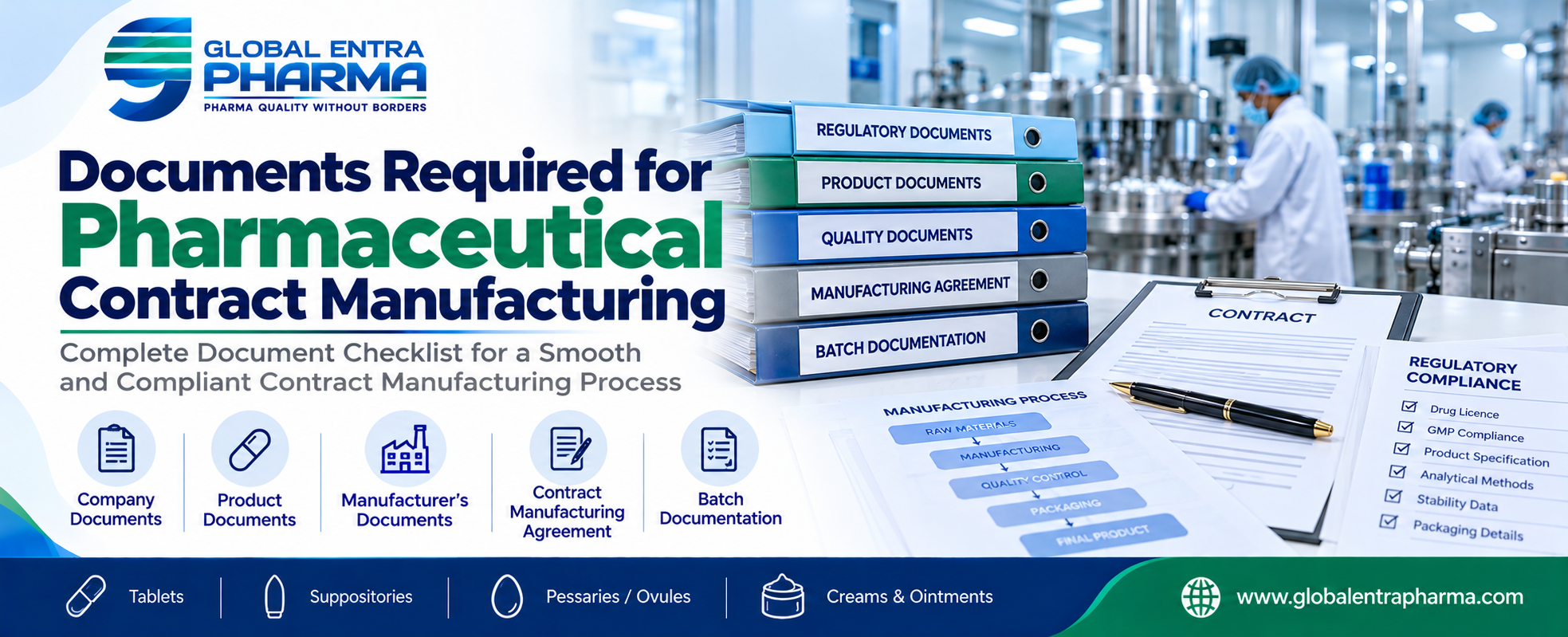
Pharmaceutical contract manufacturing allows pharmaceutical companies, healthcare businesses and international buyers to have finished pharmaceutical products manufactured by an established pharmaceutical manufacturer. Before manufacturing begins, proper documentation is important for product development, quotation, artwork approval, production, quality control and regulatory compliance.
The exact documents required can vary depending on the dosage form, product, market, regulatory requirements, manufacturing arrangement and buyer requirements. However, most pharmaceutical contract manufacturing projects involve several common categories of documents.
1. Product Requirement Details
The first step is to provide clear information about the product that needs to be manufactured.
Typical product information includes:
- Product name
- Generic name
- Dosage form
- Strength
- Composition
- Pack size
- Intended market
- Required quantity
- Preferred packaging
- Shelf-life requirement
- Storage conditions
- Pharmacopoeial standard, where applicable
For example, a buyer looking for pharmaceutical tablets should specify the required strength, tablet type, pack configuration and applicable product specifications.
For specialized dosage forms such as suppositories, pessaries, vaginal ovules, creams and ointments, additional formulation and packaging requirements may need to be defined.
2. Product Specification
A product specification provides the technical requirements against which the finished product is evaluated.
Depending on the product, specifications may include:
- Description
- Identification
- Assay
- Related substances
- Dissolution
- Uniformity of dosage units
- Microbial limits
- Physical parameters
- pH
- Viscosity
- Fill weight
- Other applicable quality parameters
The specification should correspond to the applicable pharmacopoeial or approved product requirements.
3. Formula or Composition Details
The composition of the product is an important part of the manufacturing documentation.
It may include:
- Active pharmaceutical ingredient (API)
- API strength
- Excipients
- Base materials for topical or vaginal products
- Colouring agents, where applicable
- Preservatives, where applicable
- Overages, where applicable
For contract manufacturing, the final formulation should be established and approved before commercial production.
4. Packaging Requirements
Packaging information should be clearly defined before artwork and production planning.
Common packaging details include:
- Primary packaging
- Secondary packaging
- Pack size
- Number of units per carton
- Blister or strip configuration
- Tube or container specification
- Label requirements
- Carton requirements
- Shipping configuration
For pharmaceutical products such as tablets, suppositories, pessaries and creams, the packaging format can significantly affect the final product presentation and manufacturing requirements.
5. Artwork and Label Information
Approved artwork is an important part of pharmaceutical manufacturing.
Depending on the product and market, artwork may include:
- Product name
- Generic name
- Strength
- Dosage form
- Composition
- Manufacturing information
- Batch number
- Manufacturing date
- Expiry date
- Storage conditions
- MRP, where applicable
- Registration information, where applicable
- Manufacturer details
- Marketing authorization holder details, where applicable
- Barcode or other market-specific information
The artwork should be reviewed and approved before packaging production.
6. Purchase Order
Once the commercial terms are finalized, the buyer may issue a Purchase Order (PO).
A purchase order generally specifies:
- Product
- Strength
- Quantity
- Packaging
- Agreed price
- Delivery terms
- Delivery location
- Payment terms
- Required documentation
- Special instructions
The PO provides the commercial basis for proceeding with the order.
7. Product-Specific Regulatory Documents
Regulatory documentation depends heavily on the destination market.
A buyer may require documents such as:
- Product registration documents
- Free Sale Certificate, where applicable
- Certificate of Pharmaceutical Product (CPP/COPP), where applicable
- Certificate of Analysis
- Product specifications
- Manufacturing licence-related documents
- GMP documentation, where applicable
- Stability documentation
- Product dossier
- Registration samples
- Other country-specific regulatory documents
Not every document is required for every country or product.
8. Quality Documents
Quality documentation supports the release and evaluation of the finished pharmaceutical product.
Common documents may include:
Certificate of Analysis (CoA)
The Certificate of Analysis provides the test results of the finished product against its approved specifications.
Batch Manufacturing Record
The Batch Manufacturing Record documents the manufacturing process and batch-specific activities.
Batch Packaging Record
This records the packaging activities performed for a particular batch.
Stability Documentation
Stability data may be required depending on the product, registration requirements and destination market.
Other Quality Records
Additional records may include applicable test reports, validation documents and quality-control documentation.
9. Manufacturing Agreement
Depending on the business arrangement, the parties may enter into a Manufacturing Agreement or Contract Manufacturing Agreement.
It can define:
- Responsibilities of each party
- Product specifications
- Manufacturing requirements
- Quality responsibilities
- Packaging responsibilities
- Artwork approval
- Confidentiality
- Intellectual property
- Change-control procedures
- Documentation requirements
- Rejection and complaint procedures
- Commercial terms
- Regulatory responsibilities
For long-term manufacturing relationships, a detailed agreement can help clearly define responsibilities.
10. Confidentiality Agreement
Where the buyer provides proprietary formulation, product information, technical specifications or other confidential information, an NDA (Non-Disclosure Agreement) may be used.
An NDA can establish how confidential information is handled between the parties.
11. Company and Buyer Documents
Depending on the manufacturing arrangement, the manufacturer may request basic information about the purchasing company.
This can include:
- Company name
- Registered address
- Contact details
- Company registration documents
- Tax registration details
- Import/export information, where applicable
- Authorized contact information
- Regulatory authorization, where applicable
International buyers may also need to provide country-specific importer or registration information.
12. Export Documentation
For products manufactured for export, additional shipping and export documentation may be required.
Depending on the transaction and destination country, documentation can include:
- Commercial Invoice
- Packing List
- Certificate of Analysis
- Certificate of Origin
- Shipping documents
- Bill of Lading or Air Waybill
- Export-related declarations
- Product-specific regulatory certificates
Some export documents are generated after manufacturing and shipment, so they are not normally available at the initial quotation or PO stage.
Documents Required at Different Stages
The documentation process can be understood in three stages.
Before Order Confirmation
Usually required:
- Product requirement
- Composition/formulation details
- Strength
- Pack size
- Quantity
- Target market
- Packaging requirements
- Artwork requirements
- Regulatory requirements
After Order Confirmation
Depending on the project:
- Purchase Order
- Manufacturing agreement
- Approved artwork
- Product specifications
- Regulatory documents
- Technical documentation
- Commercial documentation
After Manufacturing and During Dispatch
Depending on the order and destination:
- Certificate of Analysis
- Batch documentation
- Packing List
- Commercial Invoice
- Certificate of Origin
- Shipping documents
- Other agreed regulatory/export documents
This distinction is important because not every pharmaceutical document can be provided before production. Some documents are generated only after manufacturing, testing, batch release or shipment.
Documents for Contract Manufacturing of Different Dosage Forms
Documentation can also vary according to the dosage form.
Tablets
Typical requirements may include:
- Formula/composition
- Product specifications
- Packaging specifications
- Artwork
- Stability requirements
- Manufacturing and quality documentation
Suppositories
Additional product-specific information may include:
- Suppository composition
- Strength
- Base specification
- Mould or unit specifications
- Packaging requirements
- Storage conditions
- Product specifications
Pessaries and Vaginal Ovules
Documentation may include:
- Composition
- Strength
- Dosage-form specifications
- Base specifications
- Packaging
- Stability requirements
- Artwork
- Applicable regulatory documentation
Creams and Ointments
Depending on the product:
- Formula
- API strength
- Base composition
- pH specification
- Viscosity or rheological requirements
- Fill weight
- Tube/container specifications
- Packaging artwork
- Finished-product specifications
Documents Required for Pharmaceutical Export Buyers
International buyers should identify their destination-country requirements before production begins.
Depending on the market, the buyer may require a combination of:
- Product dossier
- Free Sale Certificate
- CPP/COPP, where applicable
- GMP-related documentation
- Certificate of Analysis
- Stability data
- Product specifications
- Approved artwork
- Manufacturing documents
- Certificate of Origin
- Commercial Invoice
- Packing List
- Shipping documents
Regulatory requirements differ between countries, so export documentation should be planned according to the specific destination market.
Pharmaceutical Contract Manufacturing with Global Entra Pharma
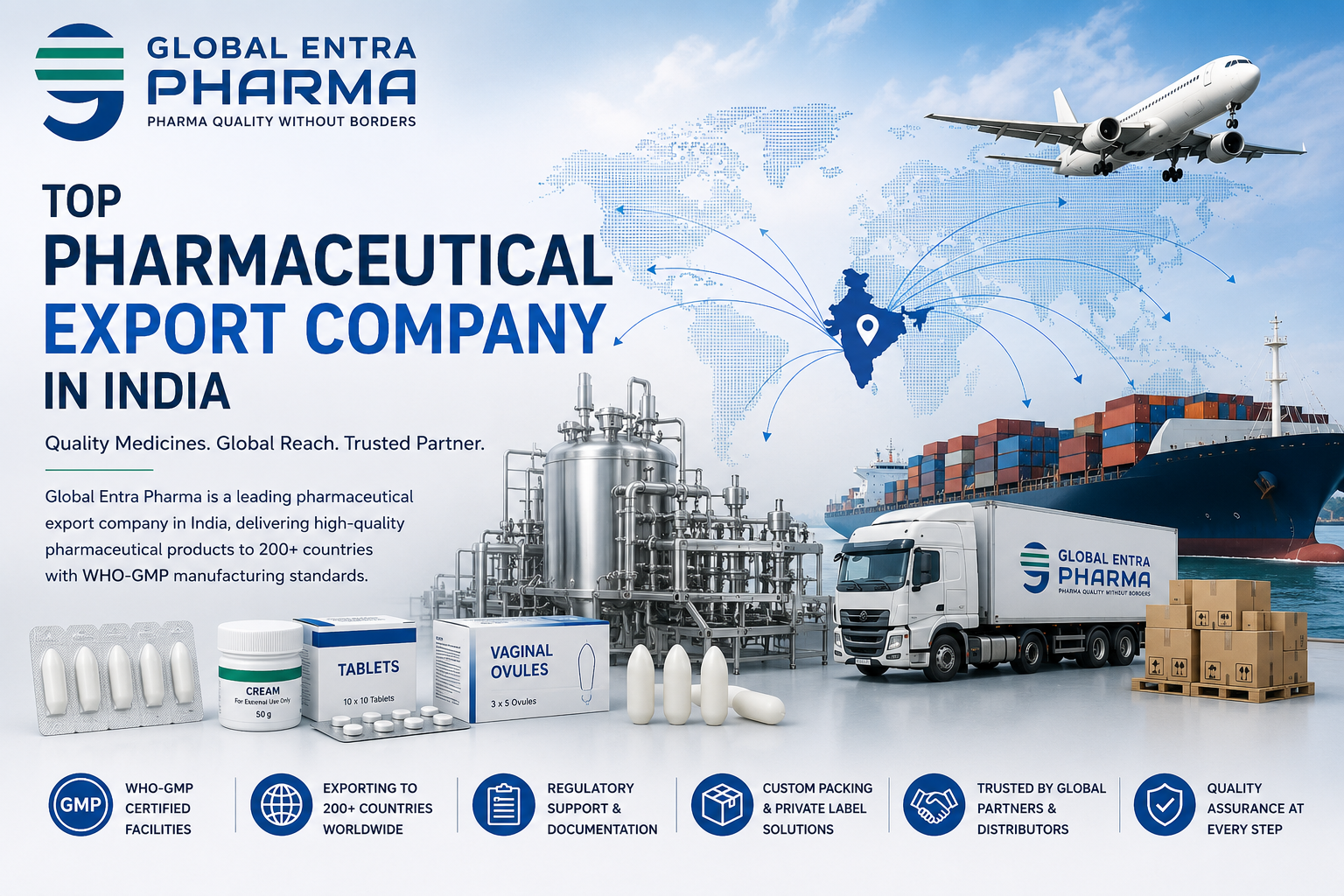
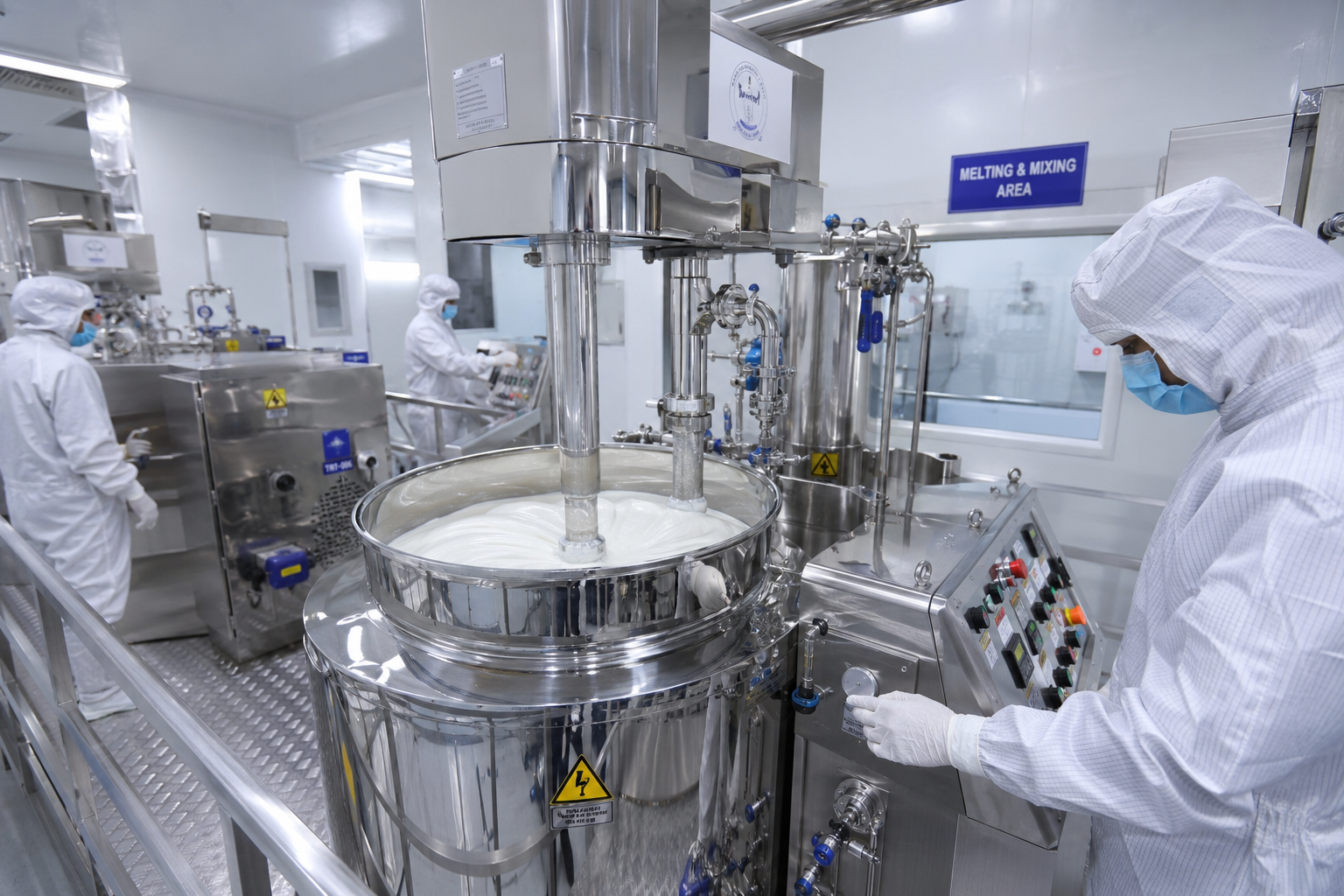
Global Entra Pharma provides pharmaceutical manufacturing solutions for finished dosage forms including tablets, suppositories, pessaries, vaginal ovules, creams and ointments.
The documentation required for a project depends on the product, packaging, quantity, destination market and regulatory requirements. Buyers can provide their product requirements and intended market so that the manufacturing and documentation requirements can be evaluated for the specific project.
Global Entra Pharma supports pharmaceutical manufacturing requirements for domestic and international markets, subject to applicable product registration, import and regulatory requirements in the destination country.
Frequently Asked Questions
What documents are required for pharmaceutical contract manufacturing?
Common documents include product requirements, composition, specifications, packaging details, artwork, purchase order, manufacturing agreement and applicable regulatory documentation.
Is a purchase order required for contract manufacturing?
A purchase order is commonly used to formally confirm the commercial order, including product, quantity, packaging, pricing and agreed terms.
Can regulatory documents be provided before manufacturing?
Some regulatory and company documents can be provided during the initial stages, while documents such as batch-specific CoA and shipping documents are generated later in the manufacturing and dispatch process.
Is an NDA required for pharmaceutical contract manufacturing?
An NDA may be used when confidential formulation, technical or commercial information needs to be shared between the parties.
What documents are required for pharmaceutical exports?
Export requirements vary by destination country. Common documents can include a Certificate of Analysis, Commercial Invoice, Packing List, Certificate of Origin and shipping documentation, along with applicable regulatory certificates.
Does every pharmaceutical product require the same documents?
No. Documentation varies according to the dosage form, formulation, market, registration status, packaging, manufacturing arrangement and destination-country requirements.
Conclusion
Proper documentation is an important part of pharmaceutical contract manufacturing. Preparing the product specifications, composition, packaging requirements, artwork, commercial documents and applicable regulatory documentation in advance can make the manufacturing process more organized and efficient.
For pharmaceutical contract manufacturing requirements involving tablets, suppositories, pessaries, vaginal ovules, creams and ointments, buyers can contact Global Entra Pharma with the product name, strength, quantity, packaging requirements and target market to discuss the manufacturing requirement.